Picture the aisle at an energy expo on day one. Row after row of stands, a lanyard round every neck, and a visitor who gives each stall a few seconds before deciding whether to stop. In those seconds, the screens on your stand do most of the talking. If you’re a marketing head with a stand booked for the January season, the brief you write in the next few weeks decides what those screens say. This post is about LED screen content for expo stands, made for the real shape of each screen, and what to put in the brief so you get it.
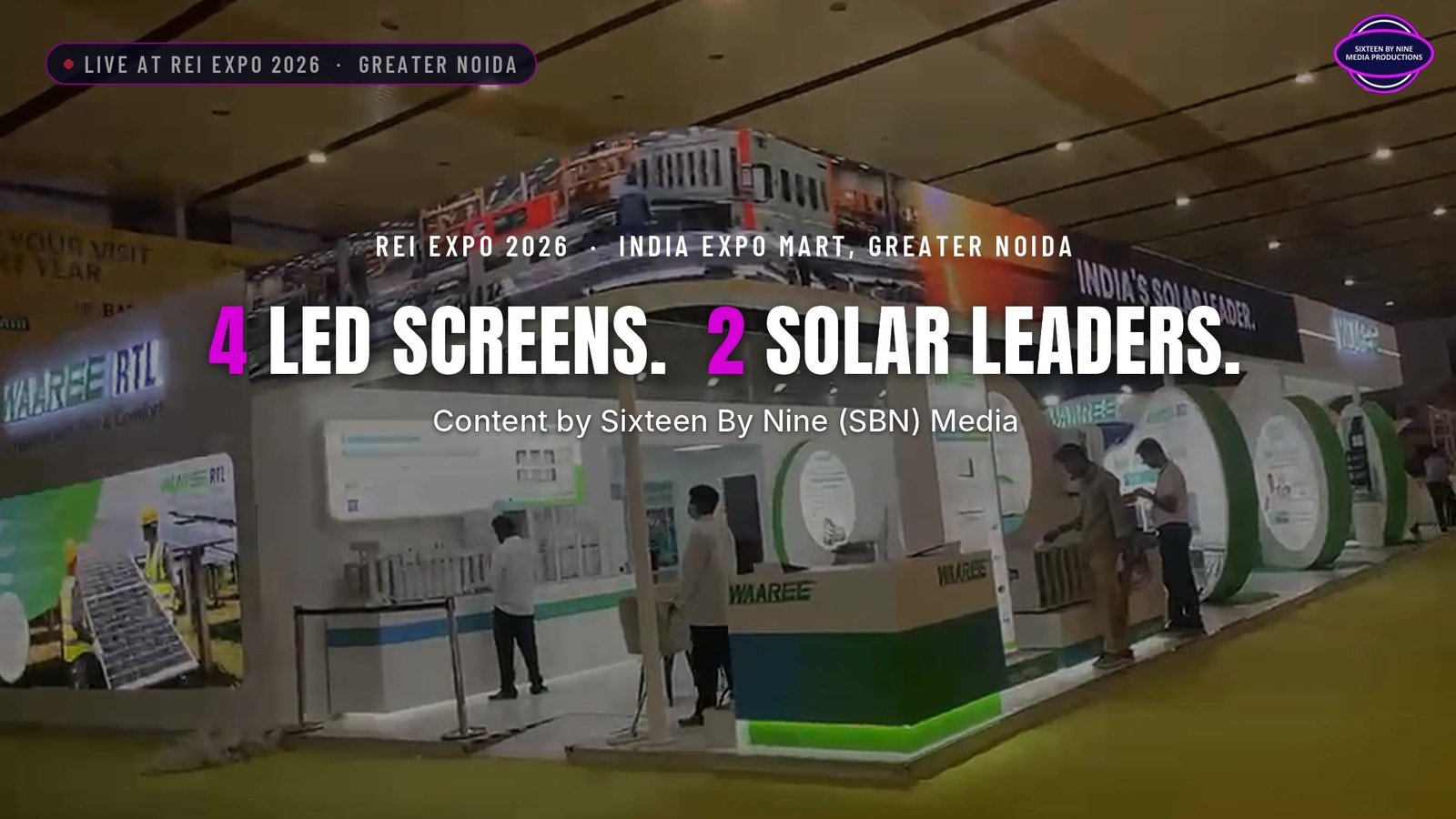
At REI Expo 2026, held from 22 to 24 October at India Expo Mart, Greater Noida, two solar brands built their stands around LED screens in unusual shapes, and Sixteen By Nine (SBN) Media made the content for both. Waaree brought a 12 m walk-through arch, a 1 m globe and an 18 m fascia. Polycab Solar, in its tenth year, brought a 23 m strip with two logos fixed on it, and launched a new Hybrid range on day one.
Four Screens at a Glance
Waaree · Tunnel
12 m Arch
3864 × 1344 px · 60 fps
Waaree · Globe
1 m Sphere
1248 × 628 px · 30 fps
Waaree · Fascia
18 m Fascia
6048 × 336 px · 18:1
Polycab Solar · Strip
23 m Strip
7728 × 504 px · about 15:1
Why Expo LED Screens Are Rarely 16:9
Expo stands start from the architecture: an arch visitors walk through, a fascia along the top of the stall, a sphere. The LED panels follow the structure, and so does the pixel count. Waaree’s 18 m fascia is 6048 × 336 pixels, an 18:1 ratio. Polycab Solar’s 23 m strip is 7728 × 504 pixels, roughly 15:1. A 16:9 video on either becomes a thin slice or a small picture with empty panels around it.
The common approach is one 16:9 master, adapted for each screen. We work the other way round: each screen’s pixel map comes first, and the content is designed on that canvas from the first frame.
Waaree: A Technology Story in Three Shapes
Waaree told its technology story across three screens and asked SBN Media for all the LED content. The client requirements: screens that are not rectangles; content that pulls visitors in from the aisle and keeps their eyes moving across the whole arch; a competitive pitch against agencies that also work with AI; and every file playing perfectly at 60 fps in Resolume Arena, the stand’s playback software. We delivered 11 videos and 3 continuous loops, one each for the tunnel, the globe and the fascia.
The Immersive Tunnel
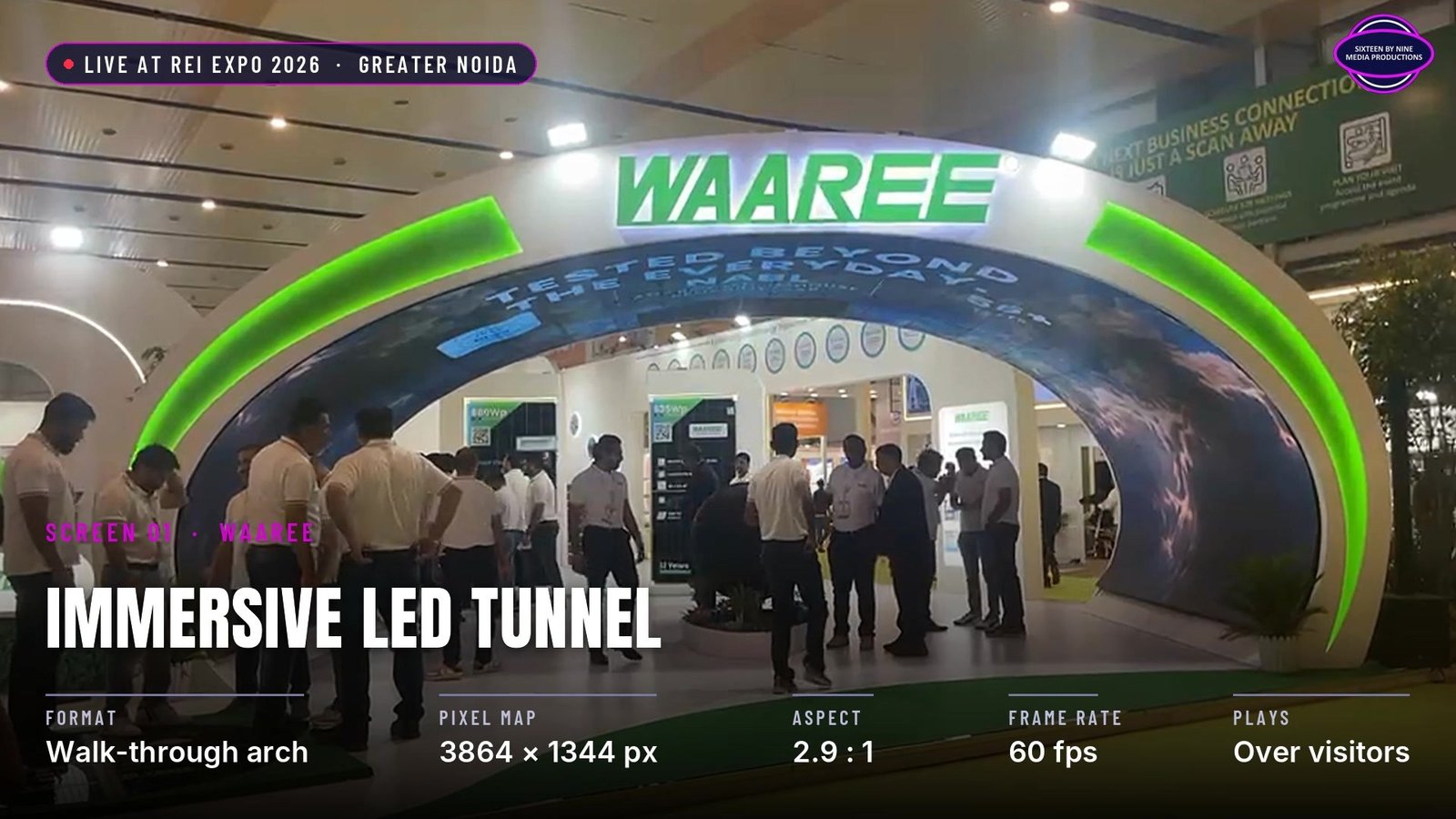
The Immersive Tunnel is a 12 m walk-through LED arch at 3864 × 1344 pixels. It runs a 2 minute 10 second loop:
- Built to Defeat the Elements, a video on Waaree’s reliability testing
- The Next Generation of Sunlight, on N-type, HJT and tandem technology
- From Silicon to Sunpower, on vertical integration, with Waaree’s figure of 37 GW across 25+ countries
- an energy journey from a single cell to a lit city
- a 10-second Sunrise breaker
Movement runs along the curve, from one base over the crown to the other, so a visitor’s gaze travels across the whole arch.
The 1 m LED Globe
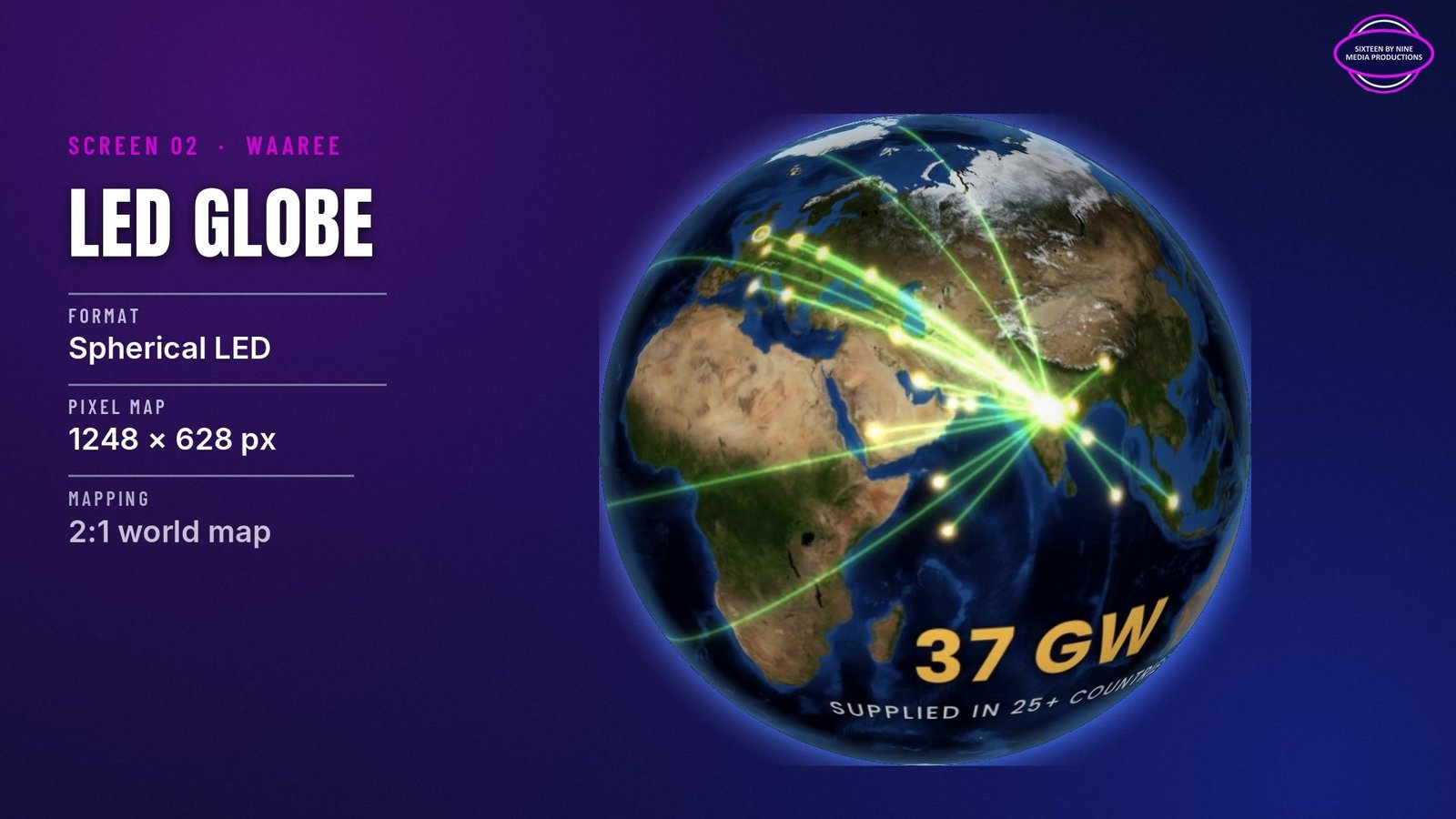
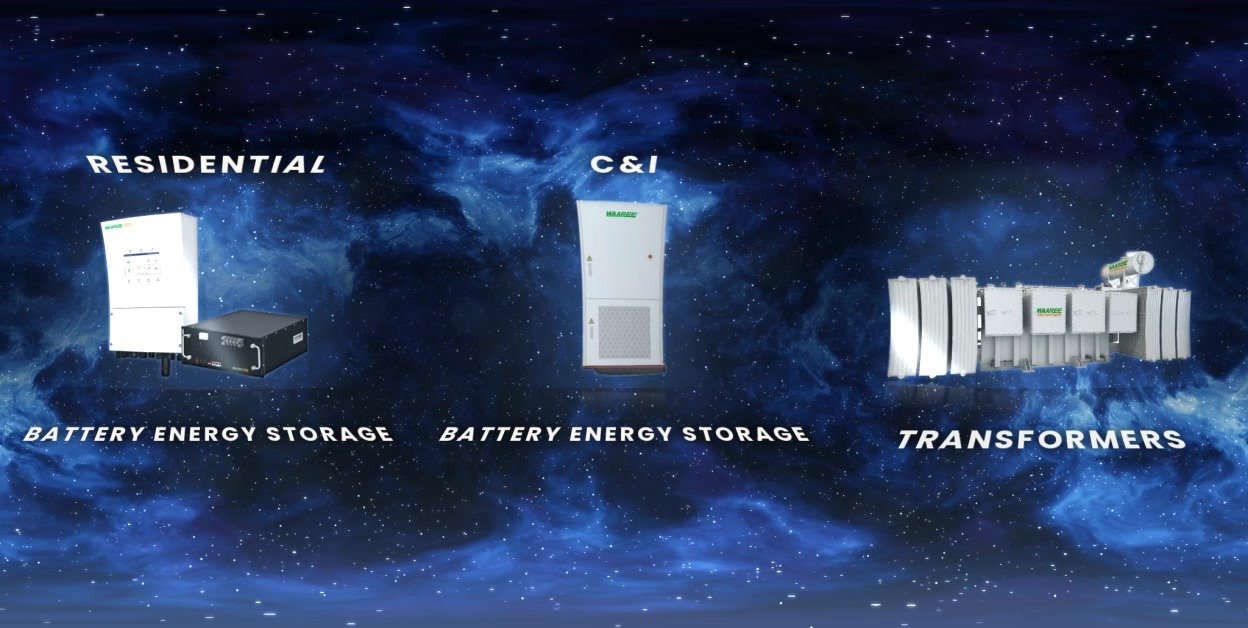
The globe plays two videos. The first maps Waaree’s plants and global reach onto the sphere; the second is a product showcase. Both are made as 2:1 world-map files at 1248 × 628 pixels, which the globe wraps into a sphere, so the content has to read from every side a visitor might stand.
The 18 m Fascia
The fascia plays a 59-second loop in four parts: One Energy Line, End-to-End EPC, Sun to Storage and Green Hydrogen. It’s the screen people see from furthest down the aisle, so each part lands one line and one number.

The Pitch, Won on the Panel Grid
Two decisions shaped our pitch. Every sample was played on Waaree’s own stall renders, so the marketing team saw the content at stand scale instead of as flat frames on a slide. And the fascia sample was built on the fascia’s real 0.5 m panel grid: each panel flips like a solar panel as sunlight crosses the fascia, and the Waaree logo assembles across the panels. On a solar company’s stand, a row of half-metre tiles reads as a row of solar panels.
On an 18 m fascia, the panel grid is the canvas. Once we had drawn the grid, the idea was sitting in it: panels turning to the sun, and the logo building itself across them.
Gourav Ghosh, Producer, SBN Media
Five Days from Approval to Final Masters
Waaree approved the work on 16 October and final masters went out on 21 October. Reviews ran on the stall render, so Waaree’s team judged the content as a visitor would see it, across several feedback rounds a day. Before delivery, we ran frame-by-frame QC so playback had no stutter at 60 fps, and the stand’s LED vendor ran test playback on site ahead of the opening.
Polycab Solar: Ten Years, One 23 m Strip
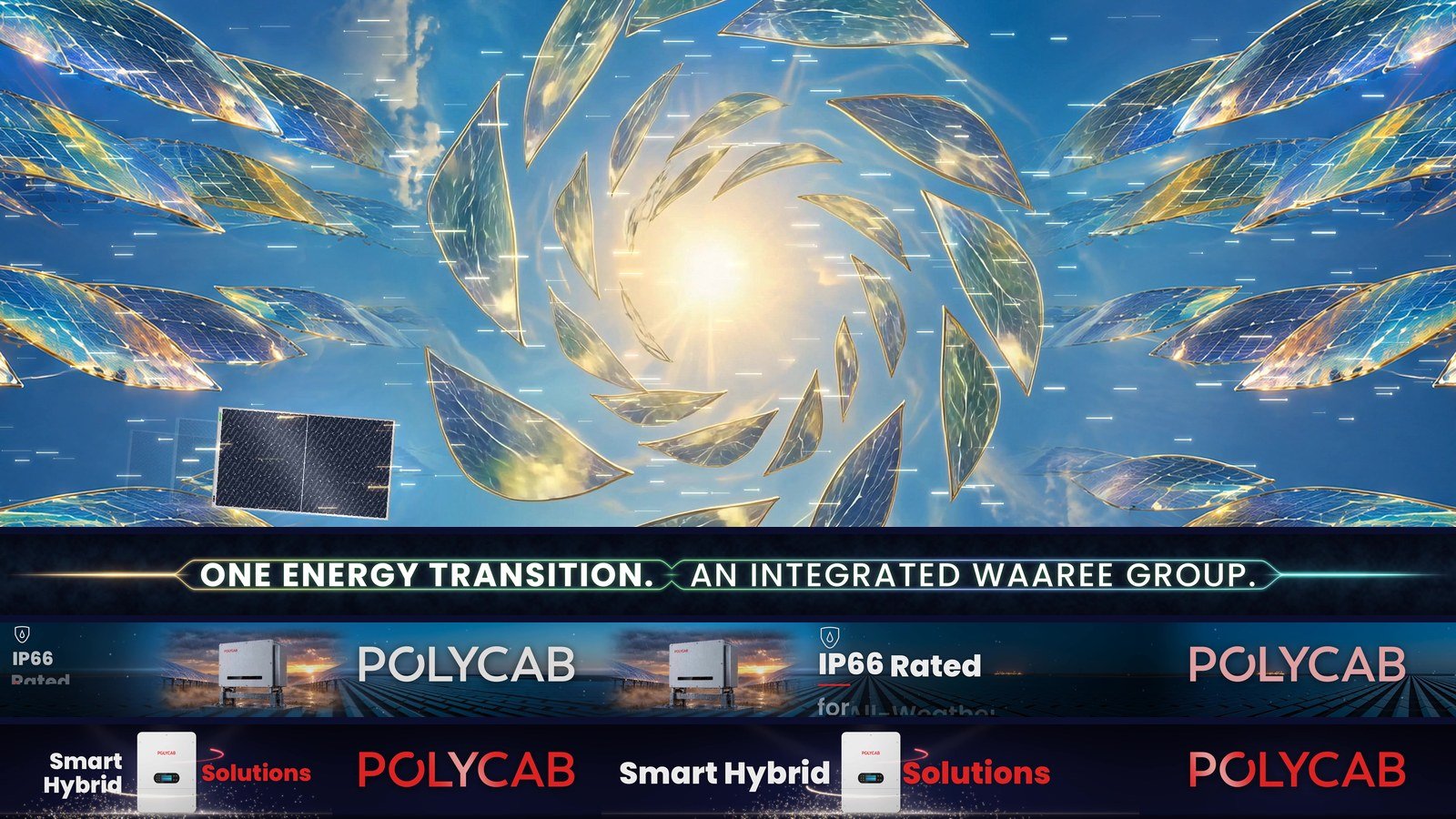
Polycab Solar, part of Polycab India Ltd, came to REI Expo 2026 in its 10-year anniversary year with a new product to launch. Its stall’s main LED screen is a continuous strip about 23 metres wide and 1.5 metres tall, 7728 × 504 pixels, roughly 15:1. Two POLYCAB logos are fixed on the strip and split it into a main face and a side zone, and every video had to work in both zones at once.
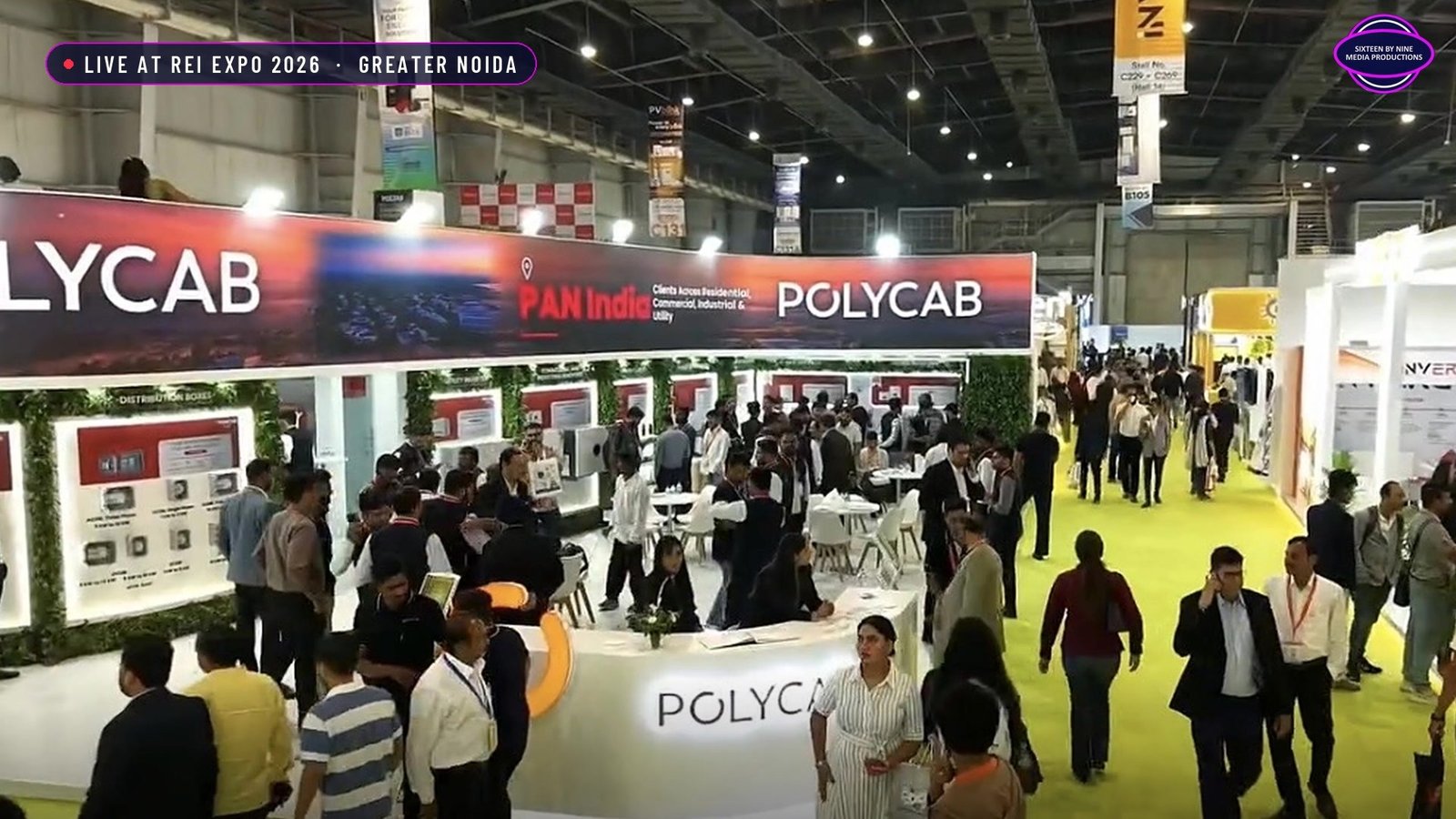
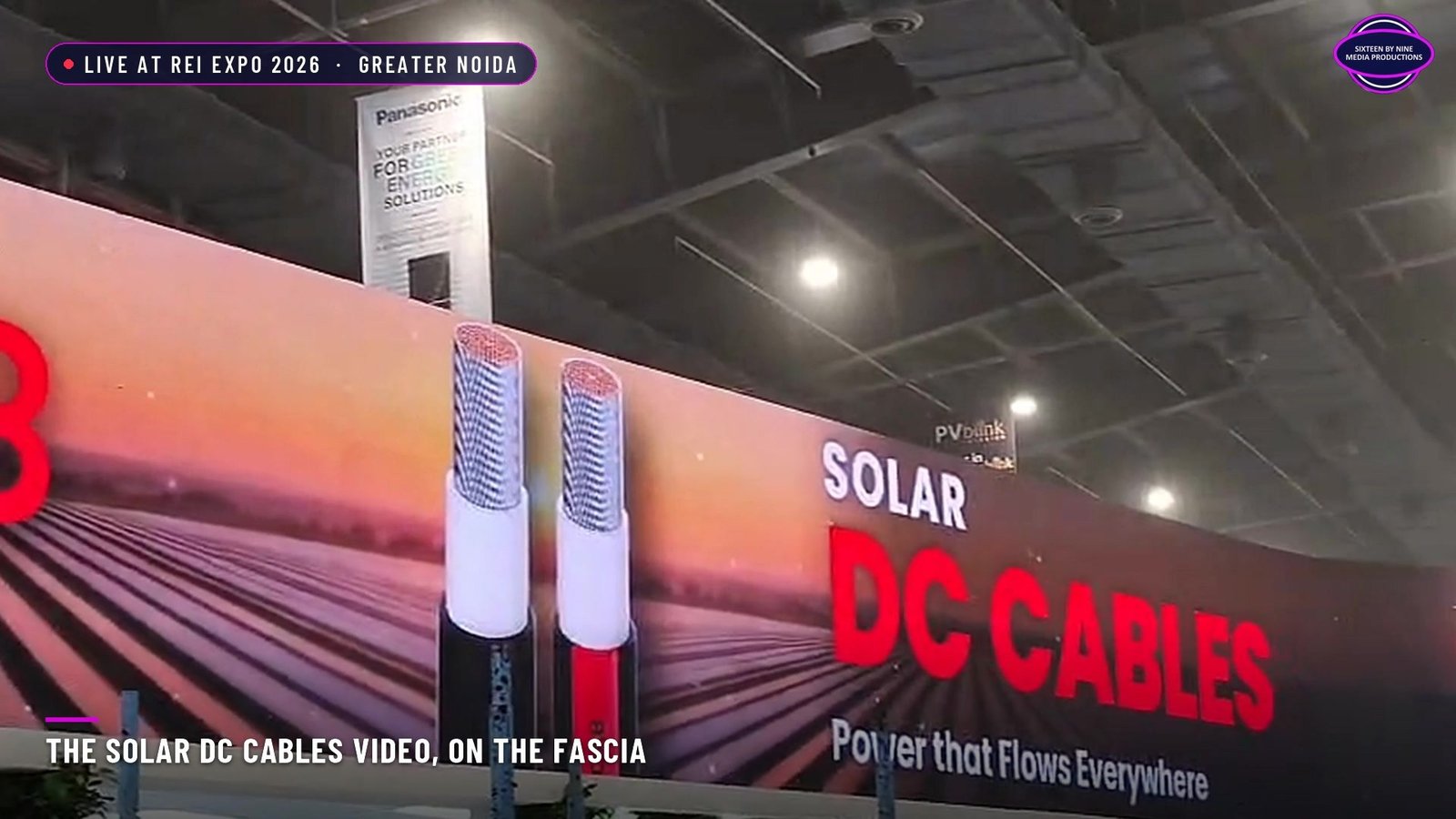
We delivered nine videos that join into a single loop of about four and a half minutes, plus a separate two-part launch sequence for the new Hybrid inverter. The loop opens with Everything Under the Sun and A Decade of Solar Leadership, then moves through C&I, utility and Hybrid inverters, solar DC cables, the Polycab Solar brand, the service promise and customer testimonials. The videos carry Polycab’s own figures, including 6 GW supplied, 11 lakh+ inverters and 2 million inverters of manufacturing capacity. Every video was approved and delivered ahead of the opening.

On the Stand: Polycab’s Marketing Head
One Background Across 23 Metres
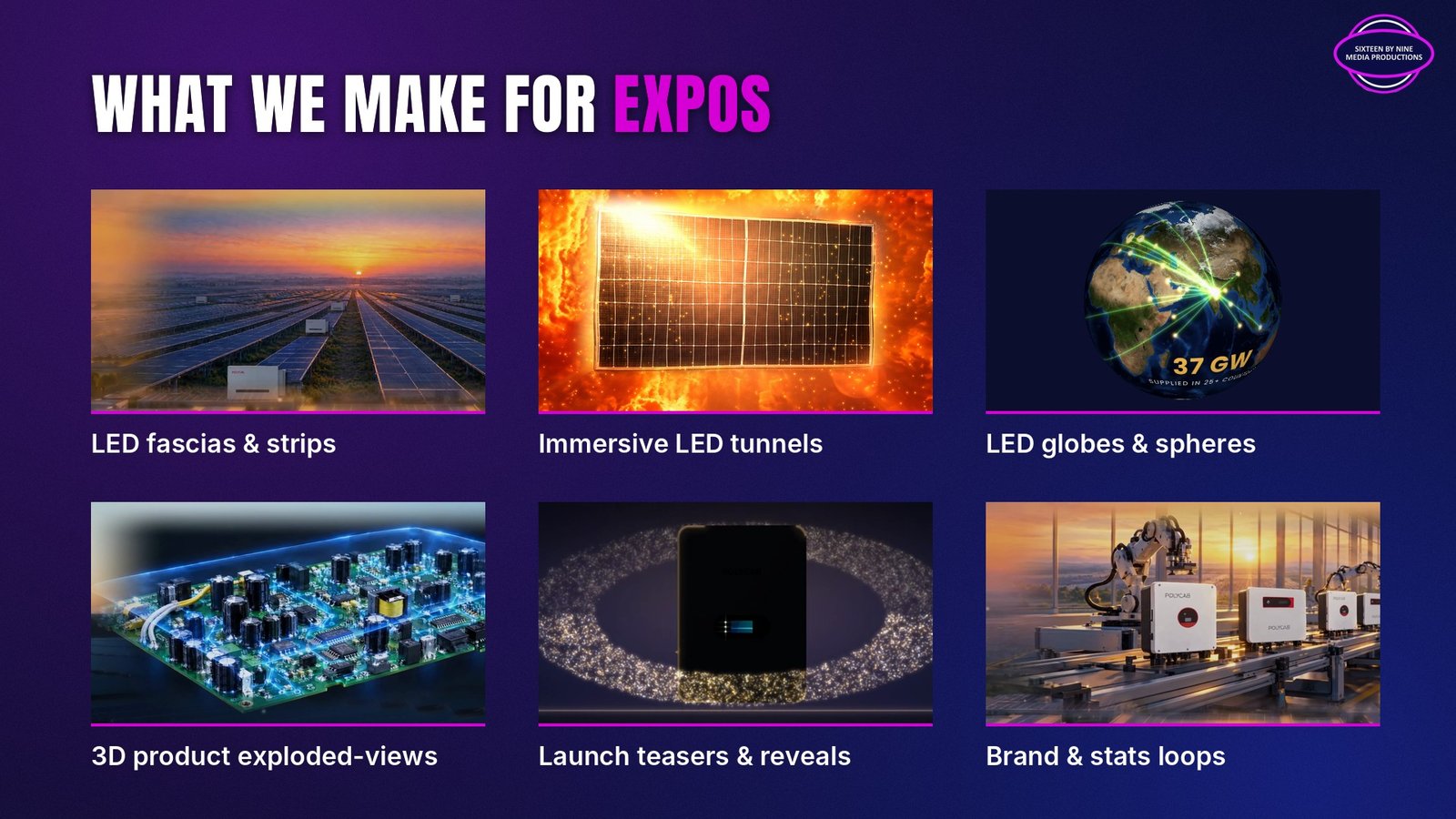
The design starts with one continuous background across the full 23 m strip, with AI-generated scenes matched to each product’s application: a solar farm for the utility inverter, industrial rooftops for C&I inverters, a home by day and by night for hybrid and battery, and a sunrise for the brand opening. Logos and text sit on top as part of the scene, with no boxes or panels. The two logos flip in, catch a light sweep and change between red and white.
A Premium Look from Polycab’s Own Renders
Polycab asked for a premium launch feel. The product look is built from Polycab’s own product renders: lighting, a rim light, glints and a soft shadow. Each product rushes forward and pushes out of the screen, and never shows its back. The 3D look was approved on 13 October. Features such as IP66, Anti-PID and smart switching each get one AI-generated visual, blended in with light-sweep transitions.
Kinetic Type for Glance Viewing
The strip plays without sound to people walking past, so each section lands one or two takeaways in a few seconds and makes sense on its own. The type is big and kinetic, arriving word by word and filling the space up to the logo, with a line icon per feature. It’s set in Polycab’s brand font, Poppins, and nothing on screen is smaller than 40 px.
On a stand screen, people take in one line at a glance. Each section gets one or two ideas, in type you can read from the aisle, and it has to make sense if it’s the only section someone sees.
Gourav Ghosh, Producer, SBN Media
Thirteen Versions of the Utility Video
Polycab Solar’s pitch was won with a 10-second sample of the 350 kW utility inverter, made before the brief was final. Structured feedback rounds followed, and the 10 October round set the template for every product video: more dynamic entries, bigger text, icons, and features without numbering. The utility video went through 13 versions before final approval. Updated figures came in on 16 October and were applied across the videos.
Real Customers, in Their Own Words
The testimonials video puts Polycab Solar’s customers on screen through their real photos and their own words. No faces were generated.
Engineered for the LED Wall
A 7728-pixel frame is wider than H.264 supports, so the masters went out in H.265 at full width, and the stand’s LED vendor converted them to their playback codec and ran test playback on the strip before the opening. Whites are capped at about 92% so they don’t glare on LED. Every video starts and ends on black, so the loop joins cleanly.
Day One: Polycab Solar’s Hybrid Launch
Polycab Solar launched its new Hybrid inverter and battery range on the stand on day one. A launch is a moment, and the strip needed content for both sides of it. A 15-second teaser, Something Big Is Coming and Watch This Space, ran before the unveiling. When Polycab’s leadership unveiled the range, a 30-second reveal played for the moment itself. Then the strip went back to the loop, which includes a 35-second video on the Hybrid inverters and 5 kWh battery.

Designing LED Screen Content for Expo: Start from the Shape
Across both stands the method was the same. The shots are AI-generated, then upscaled for LED resolution. The craft is in the compositing: each shot is placed, extended and arranged around the screen it plays on, whether that’s an arch, a sphere, an 18 m fascia or a 23 m strip split by two logos. CGI and traditional animation could reach a similar result, at a higher cost and over a longer schedule.
What to Put in a Brief for LED Wall Video Content
Most of what makes expo screen content work is decided before anyone opens an edit. This is what we ask a stand team for.
- The exact pixel size of every screen, from the LED vendor, with the panel grid and anything fixed to it. Waaree’s 0.5 m panels gave us the fascia idea, and Polycab Solar’s two fixed logos set the two zones on its strip.
- Stall renders and product renders. Waaree’s stall renders hosted the reviews, and Polycab’s product renders set its premium look.
- The playback software and frame rate. Waaree’s stand ran Resolume Arena at 60 fps.
- Your messages in order of priority, and which screen carries each.
- Any live moment, such as a launch, and when it happens. Polycab’s Hybrid unveiling had its own teaser and reveal.
When to Brief Before the January Season
Expo season starts in January, and most stand briefs are written in late November and December, while stand designs and screen sizes are being fixed. Waaree’s content ran five days from approval to final masters. Polycab Solar’s was briefed in late September, awarded on 8 October and delivered ahead of the 22 October opening, with most production in about two weeks. If your screens are still being specified, share what you have early. A provisional pixel map is enough to start designing on the right canvas.
For more, see our solar video production and industrial video production pages, and our construction timelapse for Waaree’s Rola plant.
Frequently Asked Questions
What Aspect Ratio Should LED Screen Content for an Expo Be?
The aspect ratio of the screen itself. Waaree’s 18 m fascia was 6048 × 336 pixels, an 18:1 ratio, and Polycab Solar’s 23 m strip was 7728 × 504 pixels, roughly 15:1. Ask the LED vendor for the exact pixel map and design to it.
How Do You Adapt Video Content to LED Screens of Different Shapes?
Design each screen on its own canvas from the start. Waaree’s arch, globe and fascia each had content composited around its shape. On Polycab Solar’s strip, every video was designed to work in the main face and the side zone around two fixed logos.
What Resolution Does LED Wall Video Content Need?
The native resolution of the screen, from the LED vendor. AI-generated shots are upscaled to it. Polycab Solar’s 7728-pixel strip is wider than H.264 supports, so its masters went out in H.265 at full width and the vendor converted them.
How Long Should a Booth Video Loop Be?
Long enough for your messages, with every section making sense on its own. Waaree’s fascia loop ran 59 seconds; Polycab Solar’s nine videos joined into a loop of about four and a half minutes.
When Should We Brief Our Expo LED Content?
For a January show, in late November or December, while the stand design and screen sizes are being fixed. Polycab Solar briefed SBN Media in late September for a 22 October opening.
What Files Does the LED Vendor Need?
Final masters at the screen’s exact pixel size and frame rate, in a codec the vendor can convert to their playback format. Waaree’s files were checked frame by frame for 60 fps playback in Resolume Arena.
Waaree and Polycab Solar each built a stand around screens in their own shapes. Trade show video production that works on screens like these is designed for each shape from the first frame.
Got an Expo Coming Up?
Send us your screen sizes and stall renders, and we will show you what your screens could play. Or write to info@sbnmedia.in.