
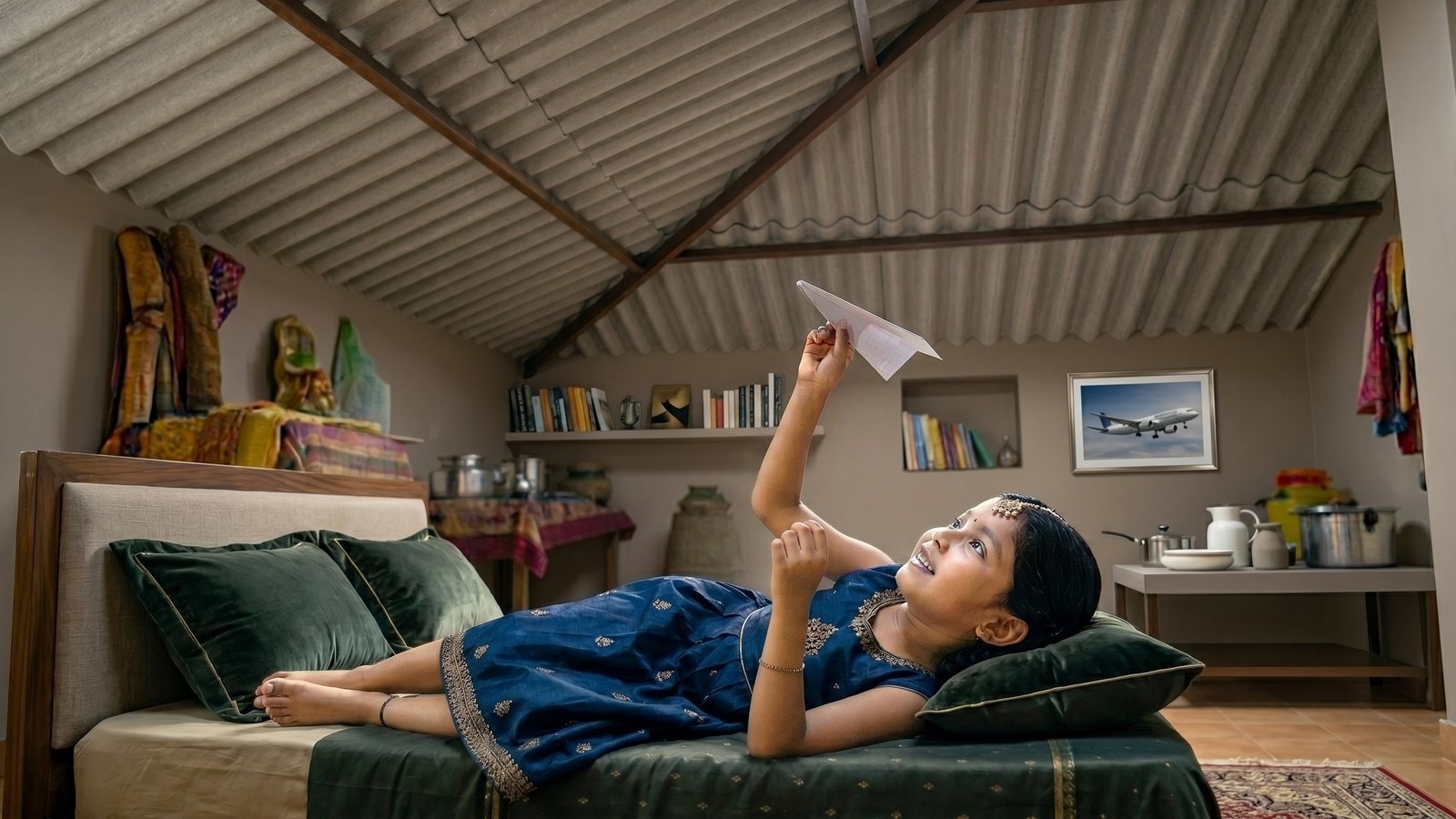
BirlaNu sells roofs that families live under for decades and rarely look at. When its Roofs and Walls category team briefed Sixteen By Nine (SBN) Media in May 2026, it asked for a category film instead of a product advertisement: one that would make CHARMINAR mean more than a roofing sheet. The answer was ‘Ye Chhat’, a 54-second film made with AI video production, with realistic AI-generated characters throughout and no live-action cast.
This AI video marketing case study is written for marketing heads at building materials makers in roofing, cement, pipes, paints, plywood, tiles, steel, cables and wires. It follows the project from brief to finished film: the challenge, the idea, how AI was used at each stage, and what BirlaNu received.
Watch the film below, or see the video on its project page.
The Challenge: Video Marketing for Building Materials Starts With a Hidden Product
BirlaNu, formerly HIL Limited, has made building material solutions since 1946 and is the flagship company of the CK Birla Group. Its portfolio covers roofs, pipes, walls, putty, construction chemicals and floors. CHARMINAR is its fibre-cement roof brand, with a legacy that also dates to 1946.
A roof is one of the least visible products in a home. It sits overhead and does its job quietly, and many families think about it only when the monsoon arrives. The same is true across the category. A pipe is hidden in a wall. Putty sits under paint. A cable runs behind a switchboard. On the shelf these products can look alike, so the conversation drifts to thickness, strength and price.
That is the core problem in video marketing for building materials. Specifications matter, but on their own they rarely make anyone remember a name. Marketing heads in this sector describe the same need in different words: a low involvement category needs a story that makes the product watchable, with the human insight ahead of the product. The decision is often made by a mason, a plumber, an electrician, a fabricator or the dealer at the counter, so one story has to work for trade and consumer at once. A TVC alone rarely covers it. The same asset has to yield informative videos, testimonial videos and short regional cuts for seasonal windows, and the whole campaign is judged on ROI.
The Brief: From a Roofing Brand to a Symbol of Progress
BirlaNu’s Roofs and Walls category team set out a clear brief. They wanted a category film for CHARMINAR, kept separate from product advertising. Its job was to lift CHARMINAR from a roofing brand to an emotional symbol of aspiration, growth and progress, built around one idea: over the decades, millions of dreams have taken shape under CHARMINAR roofs.
The creative direction asked for a film that was cinematic, emotional and rooted in India. It would celebrate rural ambition, family legacy and growth from small beginnings, with the roof as a subtle but constant thread. The audience was broad: generations of dealers, fabricators, rural entrepreneurs, poultry farmers, warehouse owners, institutions and homeowners.
A category film works at a different level from a product advertisement. It gives the dealer, the fabricator and the homeowner a reason to remember the name at the counter, before any specification comes up.
BirlaNu also brought an asset of its own. The brand line is “Where Dreams Take Flight”, and its existing key visual shows a paper plane over a house with the Hindi line “यहाँ सपने उड़ान भरते हैं”.
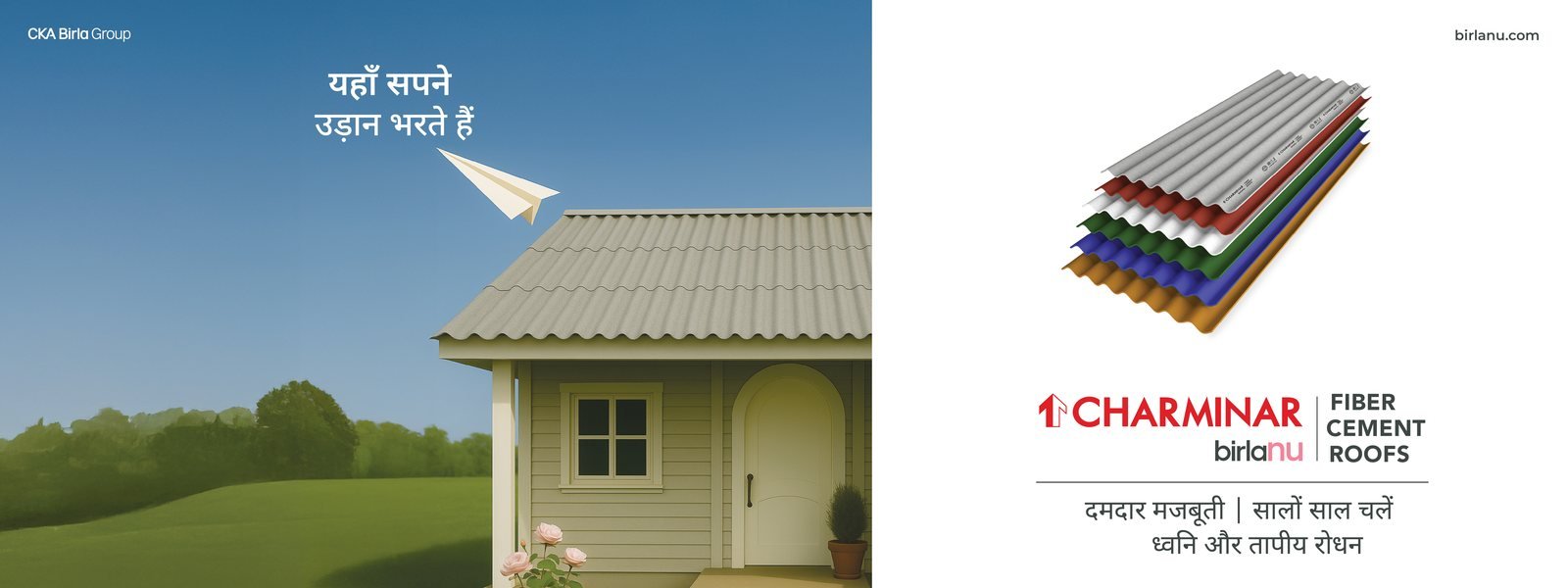
For marketing heads in this sector, the shape of the brief will be familiar: a heritage brand, a product people rarely think about, an audience that runs from the trade counter to the family home, and a request for emotion over specification.
The Idea: Two Routes Combined Into One Film
SBN Media answered in May 2026 with two concept routes.
Route A: ‘Wahi Chhat’, the Roof That Has Seen It All
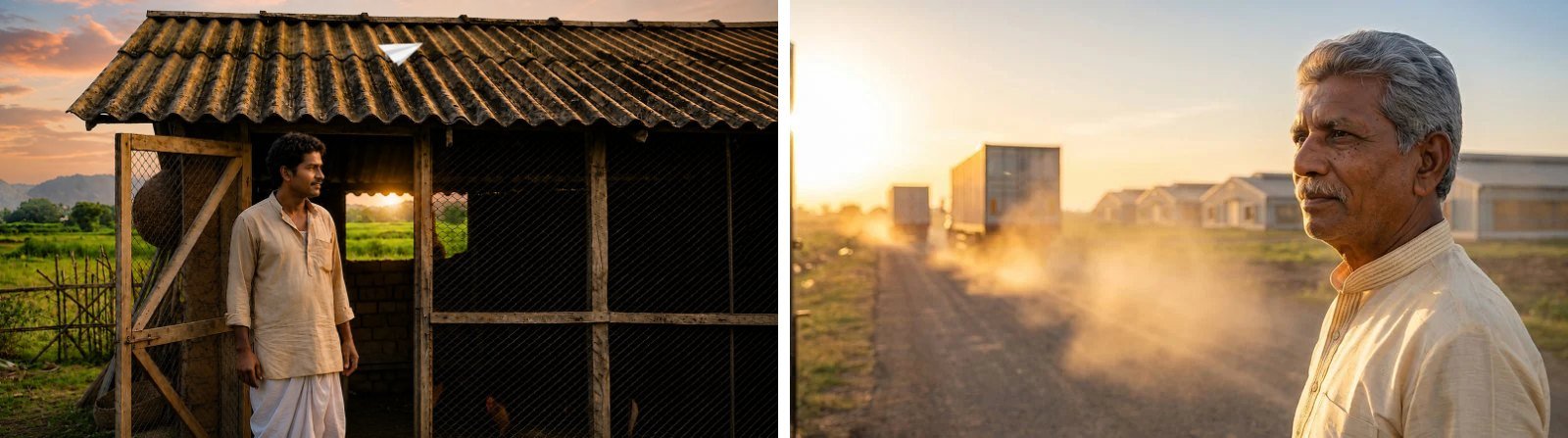
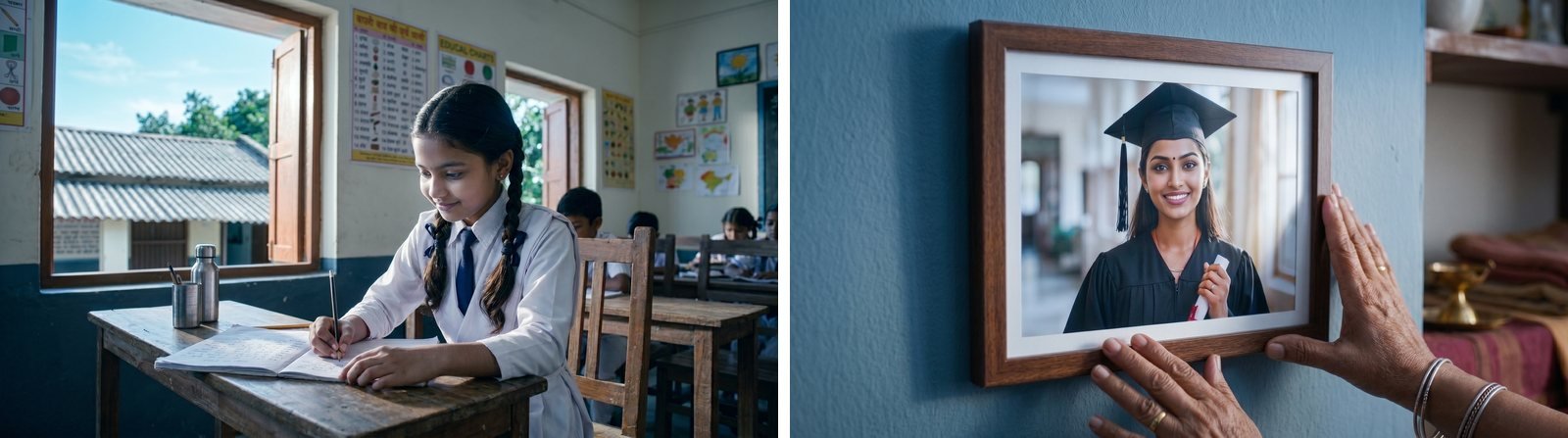
In the first route, the roof is a silent witness while the lives beneath it change across generations. A dealer’s son grows up to run the counter. A poultry farmer starts with a small flock and later watches trucks leave his farm. A schoolgirl’s graduation photo ends up hanging on the wall.
Route B: ‘Udaan’
In the second, a single paper plane carries the story across rural India, moving from one life to the next.
The Finished Film Combines Both
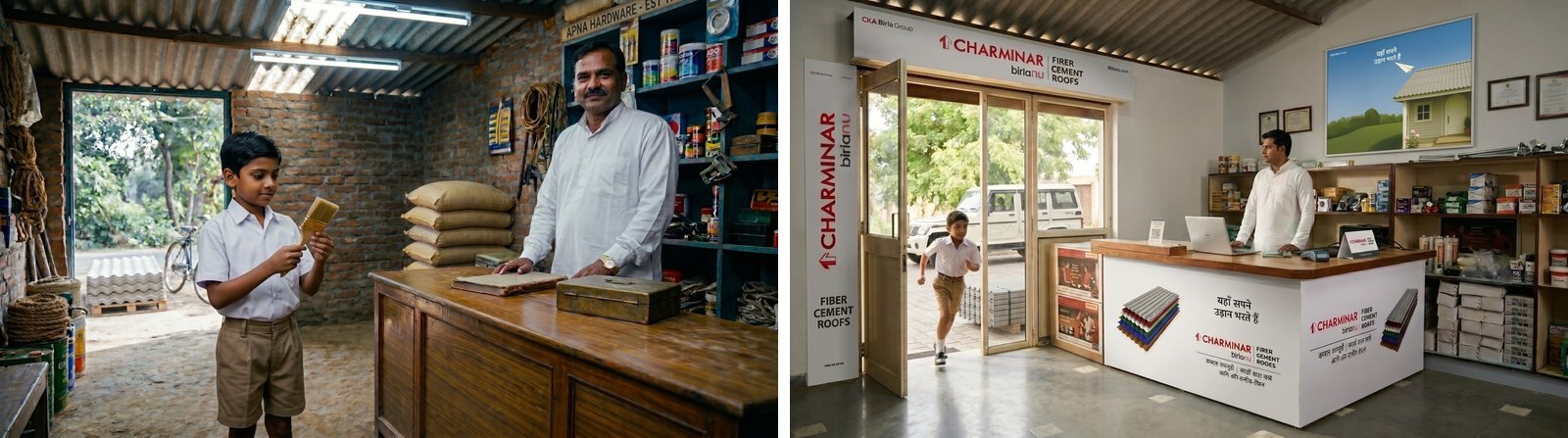
‘Ye Chhat’ joins the two. Route A gives the film its generational time shifts, and Route B’s paper plane threads them together. The plane is cream, with a thin white trail, and it flies unbroken across four decades, from a family hardware shop in 1987 to a modern village. Around the three lives, the film cuts to rain on rooftops, village aerials and a sparrow on a roof ridge. It ends on a CHARMINAR birlanu storefront at blue hour.
Why the Paper Plane Matters
The plane is the most important decision in the project. It picks up the paper plane that already flies over the house in BirlaNu’s key visual, and the film closes on the same line as that visual: “Yahaan sapne udaan bharte hain.” Instead of introducing a new symbol, the film extends an asset BirlaNu had already invested in. The key visual gains a story, and the story starts from an image the brand already owns.
Three rules kept the plane consistent. It flies continuously with its trail visible. Its direction matches the reference frame in every shot, so the path reads as one flight. And no character ever looks at it, so it stays a storyteller’s device while each person stays in their own moment.
The script also drew on the rural, roof-as-witness grammar of an earlier CHARMINAR testimonial video, so the new film speaks in a language the brand had already used.
The hardware shop carries the trade side of the story. By the time the boy has grown up to run it, the counter carries CHARMINAR branding, so a dealer watching the film sees a counter a brand partner would recognise, and the shop’s working life plays out across the whole film.
How AI Was Used at Each Stage
SBN Media has worked in AI video production since 2022 and also shoots live, often combining the two, because the brief decides the medium. For ‘Ye Chhat’, the approach was AI video production for brands, with realistic AI-generated characters in every scene.
A Shot-by-Shot Script With Prompt Cues
The script was written shot by shot in Hindi, planned at 60 seconds in 16:9, and each shot carried its own AI prompt cues. Writing the prompts into the script kept the creative intent and the production instructions in one document from the first draft.
A Lookbook Before the Storyboard
A lookbook of look-development stills fixed the palette, light and texture before any storyboarding began. The prompts read like a cinematographer’s notes: natural light, film grain, real textures and gentle handheld movement.
A Storyboard of Key Frames
A storyboard of about 30 key frames followed. Several of those frames appear in this post. They let the story be reviewed as pictures before any motion was generated.
Two Voiceover Versions and Three Voices
The voiceover was written in two versions: a poetic Hindustani version (“Ye chhat gawah hai…”) and a Hindi version (“Ye chhat saakshi hai…”). It was recorded with three voice artists. The closing line, “Yahaan sapne udaan bharte hain”, matches the key visual word for word.
Timing, Generation and Split Shots
Every shot was timed second by second to the waveform of the recorded voiceover, so each image lands on its words. Where a single generation risked strain, such as a character ageing while the plane passes, the shot was split in two and matched at the join. The finished film runs 54 seconds, against the 60 planned in the script.
Brand Safety and the Six Sub-Brand Mandatories
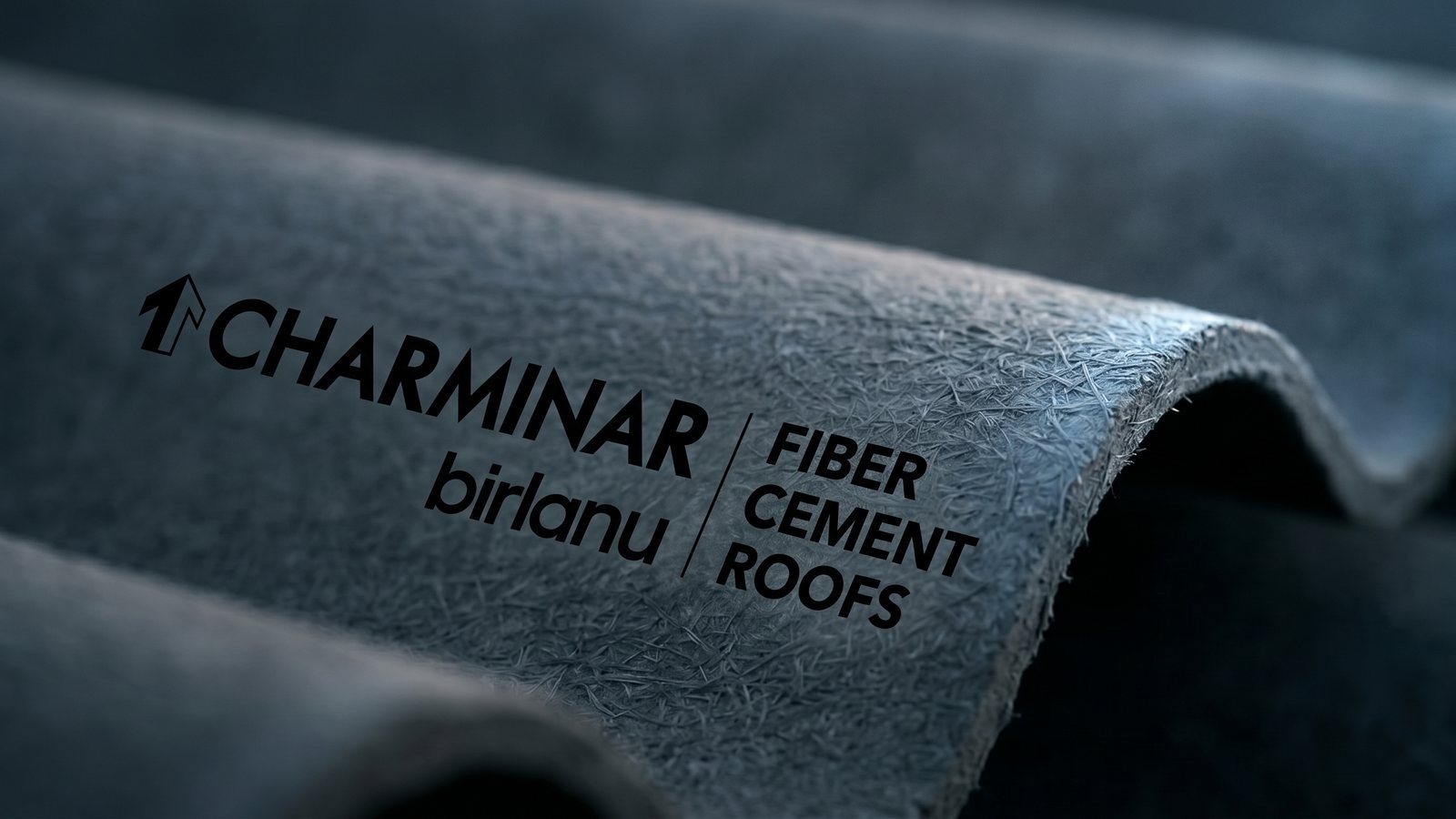
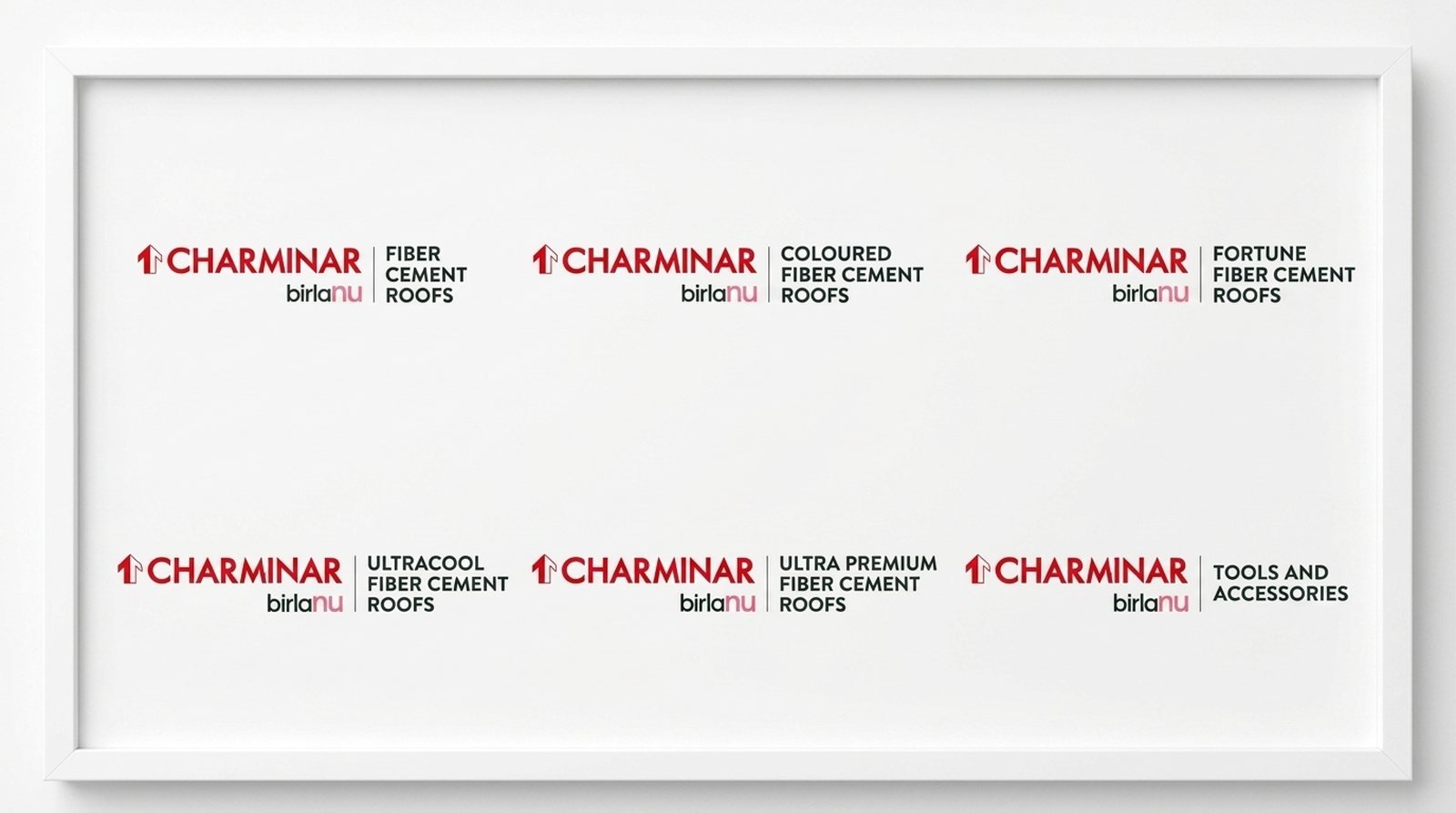
The closing frame had to carry all six CHARMINAR sub-brands: Fiber Cement Roofs, Coloured Fiber Cement Roofs, Fortune Fiber Cement Roofs, UltraCool Fiber Cement Roofs, Ultra Premium Fiber Cement Roofs, and Tools and Accessories, along with “Where Dreams Take Flight”. Small text and logos are a workflow consideration in AI generation, because generated frames tend to soften lettering. So the logos, the product stings and the end frame were built in a separate motion design pipeline, where every letter stays sharp.
Finishing, Edit, Grade and Sound
A two-pass finishing step protected shadow detail, cleaned up compression and upscaled the footage for delivery. The edit, grade and sound design then brought every scene into one continuous flight.
What BirlaNu Got
The deliverables were a 54-second category film for CHARMINAR, built on the brand’s own key visual and line; an end frame carrying all six sub-brands with “Where Dreams Take Flight”; and a set of frames, assets and story threads that can be cut into shorter versions.
That last point matters to anyone judged on ROI. Because each life in the film is its own thread, the dealer’s son, the poultry farmer and the schoolgirl could each carry a shorter story for its own audience. The shop thread speaks to trade partners and dealers. The rain on the rooftops suits a monsoon window. A new regional voiceover could sit over the same pictures, retimed the way the original was timed to its waveform. These are possibilities the structure allows, ready to be planned when the season calls for them.

The lookbook stills and storyboard frames are assets in their own right. Several appear in this post, and frames like these can also serve dealer communication, social posts or point-of-sale material, subject to the brand’s approval.
What the Project Shows for Building Materials Marketers
Every brand’s brief is its own. These are the points from this project that we think travel furthest across the category.
The product can lead through the people it serves. ‘Ye Chhat’ keeps the roof as a subtle, constant thread, as the brief asked, and lets the dealer, the farmer and the schoolgirl carry the emotion.
An existing asset can become the story. The paper plane was already in BirlaNu’s key visual. Building the film around it extended what the brand owned instead of adding something new.
Trade and consumer can share one film. A branded counter, and a dealer’s son who grows up behind it, sit in the same 54 seconds as a family’s milestones.
Mandatories can be planned from the first draft. Six sub-brands on one end frame is a design task, and the end frame was designed from the start so that every name stays legible.
CGI, traditional animation or a multi-location live shoot could achieve a similar result, each with its own demands (locations and casts, period sets or longer build work) and with them a higher cost. For a story moving across four decades and several settings, AI video production kept the same craft, from script and shot plan to edit, grade and sound mix, at a scale that suited the idea.
A live shoot is the stronger choice when the proof is physical: a working factory floor, a testing lab, a named leader speaking to camera, or a mason showing how a product is used on site. For manufacturers, our industrial video production covers plants and processes, and construction and plant timelapse records a project over the length of a build. Many SBN Media projects combine both, and our corporate videos and brand stories can mix AI video production with live footage in one piece.
The full film is on the project page.
Frequently Asked Questions
How Did BirlaNu Use AI Video Production for CHARMINAR Roofs?
BirlaNu’s Roofs and Walls category team briefed SBN Media for a category film, and ‘Ye Chhat’ was made with AI video production, using realistic AI-generated characters throughout. AI was part of every stage, from a script carrying prompt cues for each shot, through the lookbook and storyboard, to generation and finishing.
Why Does the Film Use a Paper Plane?
The paper plane already appears in BirlaNu’s key visual, flying over a house with the line “यहाँ सपने उड़ान भरते हैं”. Building the film around it extends an asset the brand had already invested in, and the film closes on the same line.
How Can One Film Speak to Dealers and Homeowners at Once?
‘Ye Chhat’ follows a dealer’s son who grows up to run the counter, alongside a poultry farmer and a schoolgirl. Trade partners and families each see their own lives in the same story.
How Were the Logos and Six Sub-Brands Kept Sharp?
The logos, product stings and end frame were built in a separate motion design pipeline instead of being generated. The end frame carries all six CHARMINAR sub-brands with “Where Dreams Take Flight”.
Could CGI or a Live Shoot Have Achieved the Same Result?
CGI, traditional animation or a multi-location live shoot could achieve a similar result, at a higher cost. A live shoot is the stronger choice when the proof is physical, such as a working factory floor or a mason using a product on site.
Who Made ‘Ye Chhat’ for BirlaNu?
‘Ye Chhat’ was made by Sixteen By Nine (SBN) Media, a Mumbai video production studio, for BirlaNu’s CHARMINAR roofs. SBN Media has worked in AI video production since 2022.
Planning a Category Film for a Building Materials Brand?
Tell us about your product, your trade partners and your season in the form below. Or write to info@sbnmedia.in.