
Construction Timelapse Documentation: What It Takes to Do It Right on an Industrial Site
Discover a new approach to industrial construction timelapse documentation, why traditional camera setups fall short on real sites, and how a field-visit-based workflow captures every phase of your project without the operational overhead.
SBN MEDIA TEAM
5/20/20265 min read
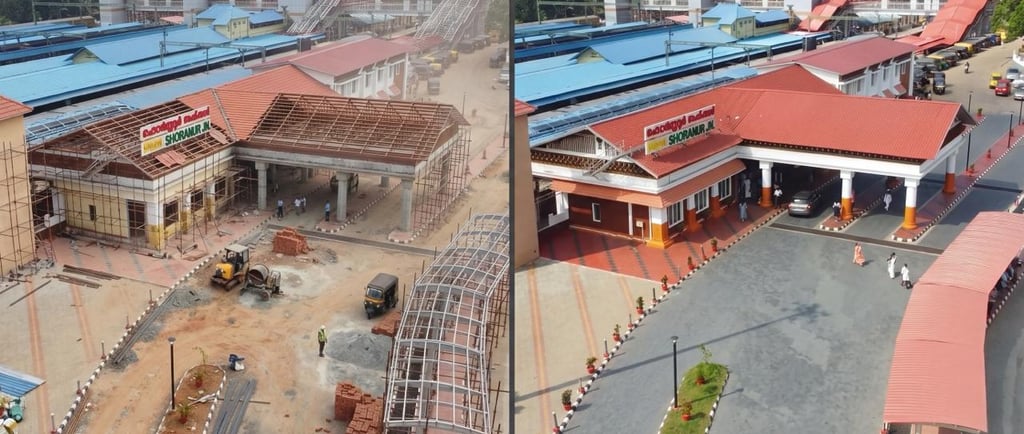
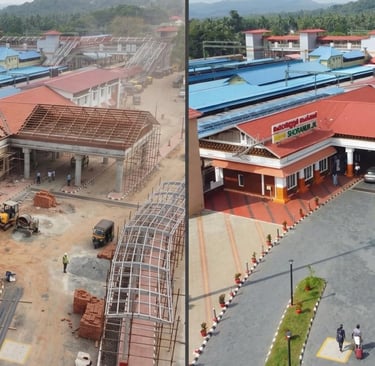
Somewhere in a conference room right now, a project lead is pulling together a site progress report. There are spreadsheets with milestone dates. There are photos taken on phones by someone out on the last site visit. Maybe a drone clip from three months ago exists.
The site is doing incredible things. Steel going up. Foundations done. Entire structures appearing in weeks. But nobody outside the project, including investors and internal stakeholders, has actually seen any of it. And once the building is complete, that entire journey is just... gone.
That's the gap construction timelapse documentation fills. And for industrial projects, manufacturing plants, renewable energy installations, and large-scale real estate developments, it fills a gap that matters more than most teams realise.
Explore SBN Media’s Timelapse Video Services
What Construction Timelapse Documentation Actually Does
A construction timelapse video compresses months or years of site activity into a few minutes of footage. Done well, it shows the full story of a project from groundbreaking to commissioning, in a format that works equally well in an investor presentation, an annual report, a board communication, or a public-facing brand film.
For marketing managers, it's ready-made content. For communications teams, it's the visual proof that no written progress update can replicate. For top management, it's how you show an investor or a government partner what a multi-crore capital deployment actually looked like on the ground.
The demand for this kind of documentation is growing fast across sectors. Infrastructure developers, solar and wind project EPC contractors, and real estate developers are increasingly expected to document project progress visually. Stakeholder communication has moved well past the written report.
But here's where things get complicated.
The Real Cost of Traditional Timelapse Setups
The conventional approach to industrial construction timelapse involves installing fixed cameras on-site. A camera rig, a power source, a storage solution, and then months of active management.
It sounds straightforward. It rarely is.
Think about what an industrial site actually looks like over a multi-month project. There's dust, monsoon, temperature swings that push into extremes. There are power interruptions. There are security risks that most site managers don't want to think about until something goes wrong.
A traditional timelapse camera setup on an industrial site is, honestly, a liability you're managing in parallel with the actual construction. Every week of the project, someone has to check that the camera is functioning. Cards need to be swapped. Lenses need cleaning. If power drops, you have to hope the camera has a battery backup and that nothing corrupted on the storage.
And here's the part that nobody talks about enough: if the camera fails on week 14 of a 52-week project, that gap in the timeline is permanent. You can't go back and recreate two weeks of missed construction activity. That section of the project is simply undocumented. In a timelapse video meant to tell the full story of a project, that missing stretch shows up like a jump cut in what should have been a continuous sequence.
The Specific Problems That Derail Traditional Timelapse on Real Industrial Sites
Continuity failure: A single camera fault, a power cut, or a storage overflow can wipe out weeks of footage. There's no recovery path. The documentation gap becomes permanent.
Operational overhead that compounds: Each site visit for maintenance is a cost and a coordination task. Over a 12-month project, this adds up significantly in time, logistics, and attention.
Weather and environment exposure: Monsoon, extreme heat, site dust, and vibration from construction activity all degrade equipment over time. The further you are from the camera between maintenance visits, the higher the risk.
Security exposure: A fixed camera installation on an active industrial site is a visible, valuable piece of equipment sitting unattended for weeks at a time. Theft is a real variable, not a hypothetical one.
Framing inconsistency: If a camera gets nudged, moved, or damaged and requires reinstallation, maintaining exact framing across the project becomes nearly impossible without a documented positioning system.
A Different Approach to Industrial Timelapse Documentation
Sixteen By Nine (SBN) Media developed a field-visit-based timelapse workflow that takes a different approach to all of the above.
Rather than leaving equipment on-site, our team visits the project every 15 to 20 days. We record from fixed, GPS-locked camera positions that are surveyed and documented during the initial site visit. No cameras stay behind between shoots. No monitoring is required between visits. The site carries zero exposure to equipment failure, theft, or weather damage.
Here's how it works in practice. Before the project begins, we conduct a site survey and identify 20 to 25 camera positions that best capture the progression of construction. These positions are GPS-locked, meaning the exact location and framing are recorded and reproduced precisely on every subsequent visit. The same angles, the same framing, every time, across the duration of the project.
The result is a set of visuals from each visit that serve as keyframes. Our proprietary workflow then takes these keyframes and produces a continuous, fluid timelapse video of the full construction timeline.
There's nothing on-site that can fail between visits. There's nothing to monitor. And because the camera positions are GPS-locked, the visual consistency across visits is built into the process rather than dependent on the judgment of whoever sets up the camera each time.
What to Expect from the Output
The final deliverable from an SBN Media timelapse project is a professional-grade construction progress video that covers the full timeline of the site, from early groundbreaking through to commissioning or handover.
Depending on the scope and number of camera positions, the video can be cut into multiple versions: a full-length project video, a shorter highlight version for social media and investor presentations, and position-specific cuts for specific stakeholder communications.
If Your Site Is Approaching Groundbreaking, This Is Worth a Conversation
The honest truth is that most industrial and infrastructure projects in India get to completion and then realise, too late, that they have no continuous visual record of how the site came together. What exists is a collection of photos, a few drone clips, and some B-roll from a site visit that someone happened to film.
A construction timelapse video, done right, changes that entirely. It turns the project's construction journey into an asset for investor and stakeholder communication.
If your site is approaching groundbreaking or is already mid-construction, get in touch with SBN Media to discuss what this would look like for your project.
Frequently Asked Questions About Construction Timelapse Documentation
How long does a construction timelapse project typically run?
The duration matches the construction timeline. Projects typically run anywhere from six months to three years. Our visit cycle of every 15 to 20 days is maintained for the full project duration.
What happens if weather or site access delays a scheduled visit?
We reschedule the visit and maintain the GPS-locked positions for the next shoot. Because no equipment is left on-site, a missed or delayed visit doesn't create a gap in the documentation the way a failed camera would.
How many camera positions does a typical industrial site require?
During the initial site survey, we identify 20 to 25 positions that collectively capture the key phases and structures of the construction. The exact number depends on site size, layout, and the specific structures being documented.
Is timelapse documentation only useful after the project is complete?
No. In-progress documentation is equally valuable for mid-project stakeholder updates, interim investor reports, and ongoing project communication. The earlier you start, the more complete the project story becomes.
© Sixteen By NIne Media 2024. All rights reserved.
SBN Media | AI Video Studio & Corporate Film Production – Mumbai, India
Specialized in AI-powered corporate videos, brand films, product ads, and multilingual content