How SBN Media Made Smart Bazaar's Exchange Offer a Hit with AI-powered ad film
SMART Bazaar’s Exchange Offer into an AI-powered ad
SBN MEDIA TEAM
3/9/20267 min read

When brands launch sales and offers, a great ad can make all the difference in getting customers to notice and act.
SBN Media does exactly that. A creative production studio specialising in AI-assisted ad films and brand storytelling, we help brands communicate faster, smarter, and at scale without sacrificing creative quality.
Watch the Smart Bazaar Video here.
The Concept: Giving Kitchen Utensils a Voice
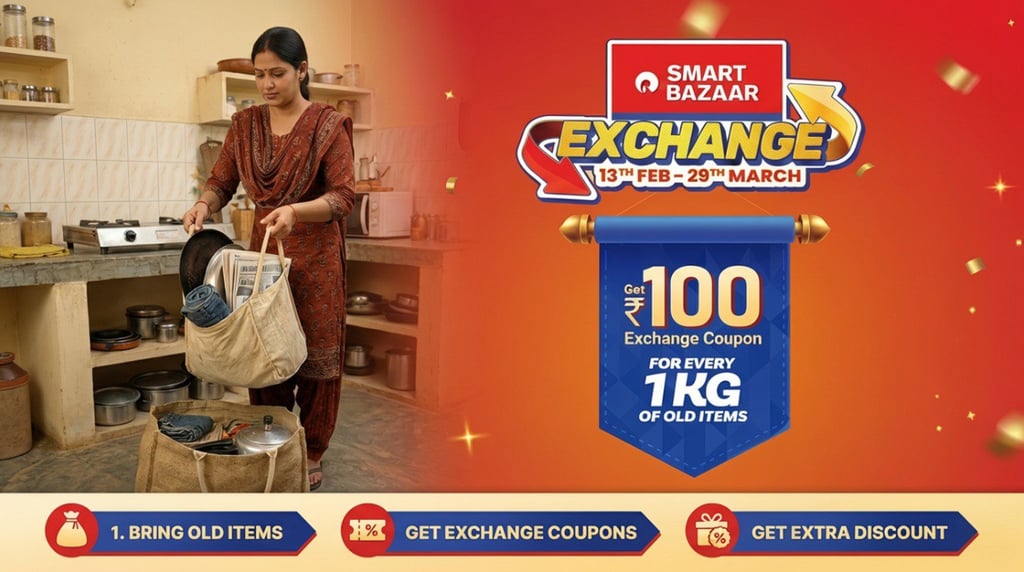
Smart Bazaar's exchange offer campaign features two animated kitchen characters: a loud, arrogant pressure cooker and a calm, self-assured thali. The cooker mocks the thali about being thrown away to the kabadiwala. The thali, unbothered, reveals she is not going to the scrap dealer. She is upgrading to a Shahi Thali through the Smart Bazaar Exchange Offer.
Forty-five seconds. Two characters. One conversation. And it works brilliantly.
The technique being used here is anthropomorphism, which means giving human personalities to non-human objects. It is not a new idea. Amul's butter girl, the M&M's characters, and countless iconic campaigns have used it for decades. But what makes the Smart Bazaar execution sharp is the specific roles the objects are assigned.
The pressure cooker represents the old mindset: dismissive, uninformed, convinced that old things have no value. The thali represents the consumer who is about to discover something better. By the time the thali delivers her punchline, the audience has already emotionally rehearsed the decision the brand wants them to make.
This is the difference between telling your audience something and showing it through a story. The brand message, that your old household items are worth more than you think, is never stated directly. It is dramatised. And dramatised messages stick far longer than spoken ones.
The Real Hook: Curiosity Before the Reveal
This is the part of the campaign that deserves the most attention, because it is what separates this ad from a standard promotional film.
The ad does not open with the offer. It does not open with a price or a discount or a brand logo. It opens with two kitchen utensils talking to each other.
That single creative choice does something very powerful. The moment a viewer sees a pressure cooker and a thali having a conversation, a question forms immediately: What are they talking about? That curiosity is what holds the viewer in place. They are not watching an ad. They are watching a scene unfold, and they want to know how it ends.
This is the structure of good storytelling applied to retail advertising. Build a connection first. Deliver the payoff second. The offer, the actual sell, only arrives once the viewer is already invested. By then, they are not being interrupted by advertising. They are being rewarded for watching.
The dialogue between the two characters also creates something rare in short-form advertising: a reason to watch till the end. Most retail ads front-load the message because they assume viewers will drop off. This ad flips that logic. It earns the watch time first and delivers the message as a punchline.
Showing the Actual Utensils: Why It Matters
One detail in this ad that is easy to overlook is the visual treatment of the utensils themselves. The old pressure cooker, the worn thali, and the everyday kitchen items are shown clearly, in detail, with all their scratches and age intact.
This is a deliberate creative decision and a smart one.
The target audience for this campaign is Indian households that have old kitchenware sitting at home. When they see those utensils on screen, recognisable and realistic, looking exactly like the things in their own kitchen, the connection is immediate. This is not a glamorous product shot. It is a mirror.
That visual relatability is doing a lot of work quietly. It closes the distance between the ad and the audience. It moves the message from "this is what Smart Bazaar is offering" to "this is for people like me, with things like mine." And that shift from general to personal is what drives action.
The most effective retail ads are not always the ones that look the most polished. They are the ones where the audience recognises something true about their own life within the first few seconds.
Why the No-Lip-Sync Format Is a Smart Business Decision
Here is something that does not get discussed enough in conversations about AI-generated ad films: the absence of lip-sync is not a limitation. For many brands, it is actually a significant advantage.
In this ad, the characters speak through dialogue delivered over visuals, without their ‘mouths’ precisely syncing to every word. This format opens up a production workflow that is far more flexible than traditional filmed or fully lip-synced AI content.
What this means practically for brands:
Translation becomes fast and affordable: To adapt this ad into Tamil, Telugu, Bengali, or Marathi, the brand simply re-records the voiceover in that language. The visual does not need to change. There is no re-editing, no re-animating, no lip-sync correction. The turnaround is a fraction of what traditional localisation requires
Multiple regional versions can go live at the same time: A national retail brand running a sale across India can have language-specific versions ready in days rather than weeks
The ad still looks professional and intentional: Because the video style is consistent and the characters are clearly defined, the no-lip-sync approach reads as a stylistic choice rather than a production limitation. Audiences accept it naturally
This makes the format particularly well-suited for brands that operate across multiple states or language markets, which describes a large portion of India's organised retail sector.
The Format That Works for Quick Announcements and Fast Reach
Beyond this specific campaign, the format itself deserves attention as a repeatable template for certain types of brand communication.
There is a category of marketing messages that needs to move fast. Sales. Exchange offers. Festival promotions. New store openings. Limited-time pricing. Product launches with a short window. For all of these, the production timeline of a traditional ad film is a genuine problem.
The AI dialogue format solves this directly. The visual world, meaning the characters, the setting, and the brand identity, can be built once. Future campaigns reuse that world with new dialogue and a new message. What used to take weeks can be turned around in days.
This also means brands can be more responsive. If a competitor launches a sale, a brand using this format can have a counter-campaign live within the same week. That kind of speed was simply not available to most brands before AI production tools matured.
Where this format is the right choice:
Seasonal and festival sales with fixed end dates
Exchange and upgrade offers tied to inventory cycles
New product or service announcements that need immediate reach
Regional campaigns that need to go live across multiple language markets at once
Brand updates that are time-sensitive but still need to feel polished and professional
The Smart Bazaar ad is a good example of all of these qualities working together. It is fast to produce, easy to localise, visually engaging, and built for the platforms where the target audience actually spends time.
Industries That Can Benefit from This Format
This approach is not limited to retail alone. Any sector that runs time-sensitive promotions, operates across regional markets, or needs to communicate offers quickly can put this format to work effectively.
Retail and E-commerce chains running seasonal sales, exchange offers, and festival promotions across multiple cities and languages.
Banking and Finance firms announcing new schemes, credit card offers, or limited-period interest rates that need to reach audiences fast.
Real Estate brands promoting new launches, pre-launch offers, or site visit campaigns tied to short booking windows.
EdTech and Coaching Institutes running admission cycles, scholarship announcements, and course launches with fixed enrolment deadlines.
Automobile Dealerships promoting exchange offers, EMI schemes, and seasonal discounts across multiple showroom locations.
Food and Beverage brands announcing limited-edition products, festive packaging, or regional flavour launches.
AI as a Production Tool: What Was Done Right
Creating photorealistic talking utensils through traditional CGI would have required 3D modelling, rigging, animation, and significant rendering time. AI-assisted production achieves the same visual outcome at a fraction of the cost and timeline. For a retail promotional ad built for digital platforms, that is a smart production decision.
The important distinction is that AI handled the execution. The creative concept, the cultural insight, the scripting: all of that came from people who understood the audience. AI is a production accelerator. It is not a substitute for creative thinking. Brands that hand creative responsibility to AI will end up with content that is technically competent and strategically hollow.
Five Things Brands Should Take Away from This Campaign
1. Lead with curiosity, not the offer
The campaign works because it withholds the sell until the viewer is already engaged. Most retail ads do the opposite. If there is a story worth telling around your offer, tell it first and let the offer be the payoff.
2. Show your audience their own life
The old, worn utensils on screen are not accidental. They are chosen because they look exactly like what the target audience has at home. Visual relatability closes the gap between an ad and a purchase decision faster than any headline can.
3. Build formats that can scale
A creative format that can be localised quickly, reused across campaigns, and adapted without a full reshoot is a genuine business asset. The no-lip-sync AI dialogue format is one of the better examples of this available to brands today.
4. Emotion earns attention. Clarity earns action.
The ad builds engagement through humour and character. It converts that engagement into action through a clean, unmistakable call to action. Both are necessary. Neither works without the other.
5. AI is a tool for execution, not ideation
The creative vision for this ad was human. AI handled the visual execution of an idea that people imagined. Brands that hand creative responsibility to AI will end up with content that is technically competent and strategically hollow.
Frequently Asked Questions
How much does an AI-generated ad film cost in India?
AI-assisted retail ad films typically cost between ₹1 lakh and ₹5 lakh, depending on complexity, characters, and platform requirements. Traditional production for comparable output ranges from ₹10 lakh to ₹50 lakh or more.
Can AI ad films be easily translated into regional languages?
Yes, and this is one of the strongest practical advantages of the format. Because the no-lip-sync approach means dialogue is delivered as voiceover, re-recording in a new language requires no changes to the visual. A brand can produce Tamil, Telugu, Bengali, and Hindi versions from a single master creative at significantly lower cost and faster turnaround than traditional localisation.
Is this format suitable for ongoing brand campaigns or only one-off promotions?
Both. The characters and visual world can be built once and reused across multiple campaigns. Each new sale, launch, or announcement simply gets new dialogue within the same established format. This makes it cost-effective and consistent over time.
What makes this format good for time-sensitive campaigns?
The production timeline is significantly shorter than traditional filming or full CGI animation. Once the visual world is established, new versions can be turned around in days. For sales, festival offers, and limited-time announcements, that speed is a genuine competitive advantage.
Ready to make your next campaign unforgettable?
At SBN Media, we turn your brand's offers into stories people actually want to watch — faster, smarter, and built to scale across every language and platform.
Whether you're planning a seasonal sale, a regional launch, or a time-sensitive promotion, we'll help you lead with curiosity, land the punchline, and drive real action.
Let's build something worth watching. Contact SBN Media today.
© Sixteen By NIne Media 2024. All rights reserved.
SBN Media | AI Video Studio & Corporate Film Production – Mumbai, India
Specialized in AI-powered corporate videos, brand films, product ads, and multilingual content