
How to Make AI Videos Feel More Human
A Production Guide by SBN Media
SBN MEDIA TEAM
3/25/20268 min read
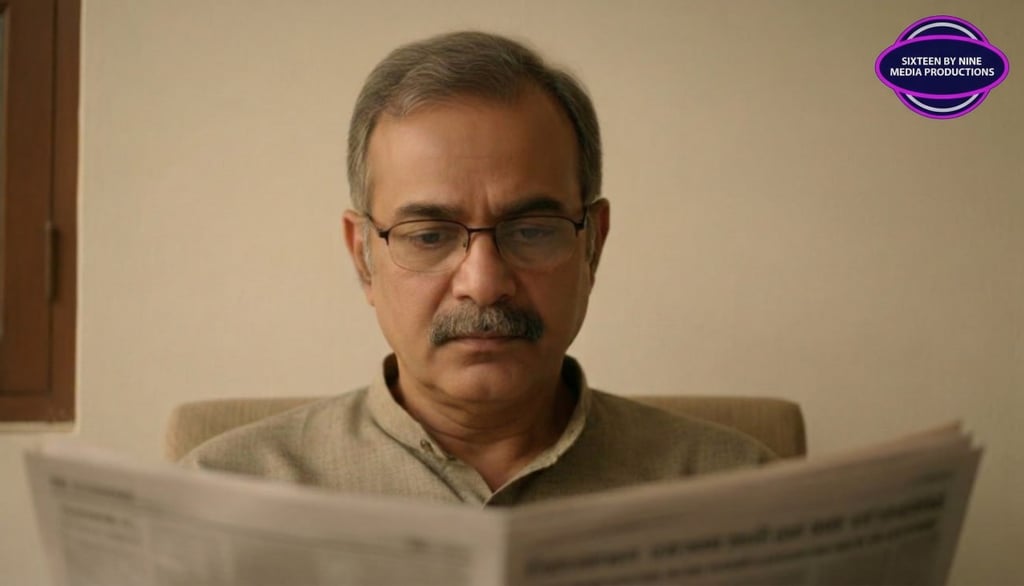

In 2023, the conversation around AI video was dominated by its possibilities. In 2024, it shifted to experimentation. By 2026, the bar has moved again. Brands, agencies, and production teams are no longer asking whether AI video production works. They are asking why some AI videos feel credible, and others feel off, even when the raw visual quality is technically impressive.
The answer is not the model. It is the craft applied around it.
Audiences process video in a way that is partly analytical and partly instinctive. They notice a spokesperson whose mouth does not quite match the words being spoken. They register, at a subconscious level, when a human figure's weight does not shift the way it should as they turn. They feel the flatness of a scene where every surface is illuminated evenly and no natural shadow falls across a face. None of these observations are made consciously in the moment. But together, they accumulate into a single verdict: this feels fake.
It is worth noting that achieving photorealistic, high-motion visuals was not impossible before AI. CGI and traditional compositing techniques could deliver comparable results, and continue to do so in productions where budgets allow for it. What AI video production makes possible is achieving that quality at a fraction of the time and cost. The production discipline required to use it well, however, remains entirely human.
What follows is a practical breakdown of five specific execution decisions that separate AI videos that feel produced using AI from videos that feel expertly made. These are not broad principles. They are technical production levers that any team working in this space can apply directly to their workflow.
1. Correct Lip Sync
Of all the visual cues that signal authenticity, the synchronisation between a speaker's voice and their mouth movement is the most immediately legible. Human beings are exceptionally well-calibrated to detect even minor misalignments between audio and lip movement. This sensitivity is not learned. It is a function of how the brain integrates auditory and visual information.
In AI video production, lip sync accuracy varies considerably depending on the platform and the source audio. A common production consideration is the relationship between the quality of the reference audio and the quality of the lip motion generated from it. Unclear pronunciation, ambient noise in the source recording, or phonemes that are difficult to visually distinguish all introduce variance in the output. The workflow consideration here is straightforward: invest in clean, professionally recorded source audio before generating lip-synced visuals, not after.
Post-generation, it is worth reviewing the output at half speed before committing to the final cut. Misalignments that are subtle at normal playback become immediately apparent when slowed down, and catching them at this stage is far easier than correcting them later. Where a platform offers a retry function, use it. The stochastic nature of generative output means a second or third generation from the same prompt frequently produces a more accurate result.
Dedicated lip sync tools built specifically for this function, rather than general-purpose video generators, consistently outperform integrated solutions when the priority is precision. Treating lip sync as its own discrete production stage, rather than an output to be accepted as-is, is one of the most reliable ways to lift the overall credibility of an AI video.
Watch the Zydus Healthcare Video
Watch the Harpic Campaign Video
2. Correct Human Skin Texture
There is a significant difference between a face that is visually sharp and a face that reads as real. AI video generators, particularly when producing close-up or mid-close shots of human subjects, frequently produce skin that is too clean. The pores are too uniform, the surface too smooth, and the subtle micro-movements of real skin in response to light and expression are absent.
This is a known characteristic of current-generation models, and it is more noticeable in static or slow-moving shots than in footage with strong movement or wide framing.
The production response to this should not be to avoid close-ups. Rather, achieving realistic skin texture in AI video comes down to prompting and iteration. The right descriptors, specifying pore detail, skin tone variance, subsurface light interaction, and realistic imperfections, guide the model toward output that reads as genuinely human. When one model struggles with a particular skin type or lighting condition, testing across different AI video models is the practical path to finding what works.
At the post-processing stage, AI upscalers do the heavy lifting. Rather than introducing texture from scratch, they work with what the model has already produced, sharpening fine detail, enhancing surface quality, and bringing out the subtle variance in tone and reflectivity that separates polished output from flat, synthetic-looking footage.
3. Correct Body Language and Motion
AI video generation has become highly competent at producing motion that is technically correct on a frame-by-frame basis. Where it continues to require careful direction is in producing motion that is emotionally coherent across a sequence. Figures that move correctly but do not move with intention, or whose gestures do not align with the emotional register of the audio, are read as performances rather than presence.
The production approach to this is primarily a prompt engineering consideration. The more precisely a motion brief describes not just the action but the quality and intention behind the action, the more coherent the generated output tends to be. Prompting for a subject who "gestures towards the camera while speaking" produces a different result from prompting for a subject who "leans forward with engaged, open hands while making a key point." The specificity of the direction directly corresponds to the specificity of the output.
Beyond prompting, reviewing motion with the audio muted is a useful quality check. If the body language reads as natural and contextually appropriate without the audio providing interpretive context, the motion will hold up under scrutiny when the full video is assembled. If it only makes sense with the audio present, the motion is working as accompaniment rather than as communication, which is a meaningful distinction.
4. Long Shot Duration
There is a tendency in AI video production, particularly among teams that are newer to the medium, to cut between shots frequently. The reasoning is intuitive: shorter shots mean less time for the viewer to notice something that does not look quite right. In practice, this strategy often produces the opposite effect.
Rapid cutting is a stylistic device with a specific emotional register. It communicates urgency, tension, or visual energy. When applied to content that is not inherently urgent, it creates a disjunction between the pace of the visuals and the pace of the communication. The viewer does not consciously identify the source of the discomfort, but they experience the video as restless or unresolved.
Longer shots, by contrast, ask the viewer to settle into a scene. They communicate confidence on the part of the production, an implicit signal that the visual world being presented can bear extended scrutiny. This is as true for AI videos as it is for conventionally shot material. A well-composed, properly executed shot that holds for five to eight seconds reads as more authoritative than three cuts across the same duration.
For AI videos specifically, longer shots do something that quick cuts cannot. They place the viewer inside the world of the video, allowing the environment and the people within it to register as real. This is how we experience events in actual life. There is no editing, no switching between wide and close angles. We witness a single continuous take, and that continuity is what makes the moment feel true. Current AI tools are well-equipped to hold that continuity across a take, making the longer shot a natural fit for the medium. The practical recommendation is to resist the instinct to cut early, and to allow well-executed shots to run long enough to do their full communicative work.
Watch the BirlaNu CoverMax Putty Ad Video
How Sixteen By Nine (SBN) Media Applies These Techniques in AI Video Production
At Sixteen By Nine (SBN) Media, we approach AI video production with the same production discipline we bring to any other format. The tools change. The standards do not.
When we produce AI video content for clients in sectors where credibility is critical, including pharmaceutical, industrial, and financial services, the standard we apply to AI-generated footage is the same standard applied to footage captured on a professional camera. Every shot is reviewed against a consistent set of quality criteria. Skin rendering, motion coherence, lip sync accuracy, and lighting naturalism are all assessed before any shot is approved for edit.
Working across projects for clients like Zydus, BirlaNu, and Meesho, we have found that the production decisions that matter most are rarely the ones that happen inside the AI platform. They are the decisions made before generation, in the brief, the prompt architecture, and the visual direction, and the decisions made after, in the review, the grading, and the post-processing workflow. The platform is one part of a larger production system, and it performs at its best when every other part of that system is functioning with equal rigour.
For clients who are evaluating AI video production for the first time, this is the most useful framing we can offer: the production investment in AI video is not primarily a technology investment. It is a craft investment. The teams that produce AI video that feels human are the teams that have internalised the production principles that make any video feel human, and have learned where and how to apply them within the specific constraints and affordances of the medium.
Frequently Asked Questions
Is AI video production ready for brand-level use?
Yes, when approached with the same production rigour applied to any other format. The tools are capable of delivering broadcast-quality results. The quality of the output depends significantly on the quality of the production direction applied before and after generation.
How do you fix lip sync issues in AI-generated video?
Start with clean, professionally recorded source audio. Review generated output at reduced playback speed to catch misalignments before editing. For precision work, use a dedicated lip sync tool rather than a general-purpose video generator, and treat lip sync correction as its own distinct production stage.
Why does AI-generated skin look artificial, and how is that corrected?
Most current AI video models produce skin that is too smooth and too uniform because they optimise for visual sharpness rather than biological accuracy. Post-processing steps that introduce realistic texture variance, fine detail, and natural light response address this effectively without requiring a change of platform.
What type of lighting works best in AI video production?
Directional, naturalistic lighting with visible falloff and shadow produces more believable results than evenly distributed illumination. Describe light sources specifically in your prompts, including direction, quality, and colour temperature, and use post-production grading to soften any areas where illumination reads as too uniform.
Does SBN Media offer end-to-end AI video production, including post-processing?
Yes. SBN Media handles the complete production workflow, from concept and prompt architecture through generation, quality review, post-processing, and final delivery. Every output is assessed against the same quality standards applied to conventionally produced content.
Can AI video be used for regulated industries like pharmaceuticals or financial services?
It can, with appropriate production discipline. SBN Media has produced AI video content for clients in regulated sectors and has developed quality review processes that address the specific credibility and compliance requirements those industries carry.
The Production Standard Is the Differentiator
Every medium has a maturity curve. In the early years of digital video, the conversation was about whether the format was credible. Then it became about who was using it well. AI video is moving through that same curve, and it is moving quickly.
The five techniques covered in this blog are not workarounds for a format that is not yet ready. They are the production fundamentals that determine whether any video, regardless of how it is made, earns the attention of the person watching it. Lip sync accuracy, skin texture, intentional motion, confident shot duration, and naturalistic lighting are not AI-specific concerns. They are the same concerns that have defined professional video production for decades. AI video simply requires that they be addressed in a different place in the workflow, with different tools, and with a clear understanding of where the medium's current generation characteristics need to be shaped by production decisions.
What is becoming clear, as more brands move from testing AI video to producing it at scale, is that the technology is not the limiting factor. The limiting factor is whether the team directing it has the production expertise to know what good looks like, and the discipline to achieve it consistently. A well-directed shot from a capable AI platform will always outperform a poorly directed shot from a more capable one.
For brands and marketers, this is ultimately good news. It means the quality ceiling for AI video is not set by the platform. It is set by the production team. And that means it is something that can be deliberately raised, project by project, through the accumulation of craft, process, and informed production decisions.
At SBN Media, that is precisely the work we are doing. The format is new. The standard is not.
Need professionally produced AI videos for your brand? Get in touch with SBN Media today.
© Sixteen By NIne Media 2024. All rights reserved.
SBN Media | AI Video Studio & Corporate Film Production – Mumbai, India
Specialized in AI-powered corporate videos, brand films, product ads, and multilingual content