What Is Zero-Shoot Video Production and How Does It Work?
A New Way to Think About Video Production
SBN MEDIA TEAM
3/20/202610 min read
For most of the industry's history, producing a video meant booking a crew, scouting locations, managing talent, and spending weeks in production and post. That model still has its place. But it is no longer the only path to broadcast-quality work.
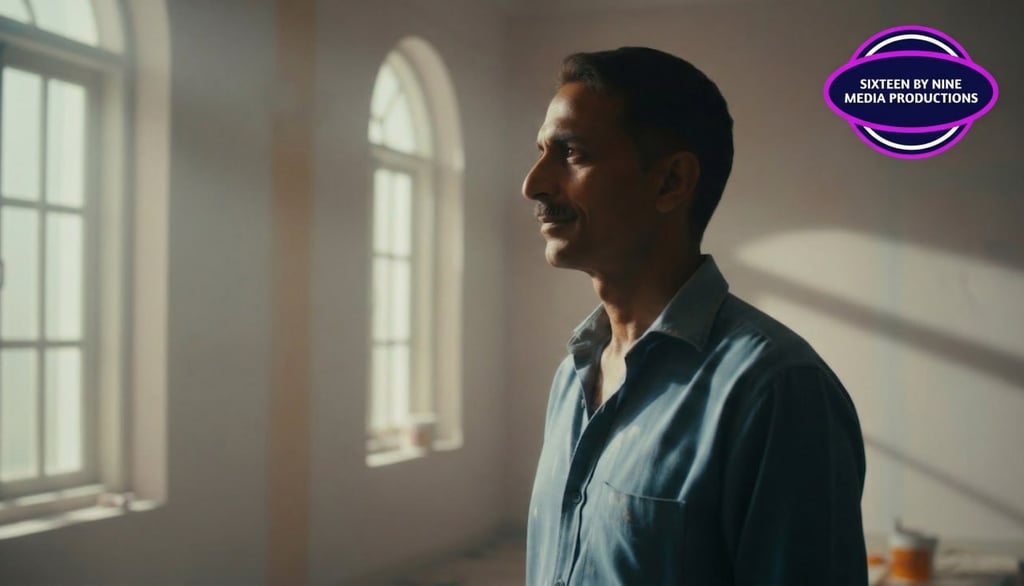
Zero-shoot video production is a method where the entire visual content, including every scene, character, environment, and effect, is generated using artificial intelligence tools, without a single day of camera shooting. Pre-production, production, and post-production all happen inside a digital pipeline.
At Sixteen By Nine (SBN) Media, we have built our zero-shoot workflow over dozens of campaigns across industries, including retail, FMCG, healthcare, e-commerce, and building materials. These videos have run on national television, mobile platforms, and digital channels, proving that zero-shoot production delivers high-quality content for any distribution platform.
Here is how the process works, what makes it powerful, and where it delivers the most value.
What Zero-Shoot Video Production Actually Means
The term can create confusion. Zero-shoot does not mean low effort or low quality. It means that the visual output of the video is constructed digitally rather than captured with a physical camera. Every frame is generated, not filmed.
A zero-shoot production still follows the same fundamental creative process as a traditional shoot. It begins with a brief, moves through scripting and storyboarding, and ends with a polished video ready for broadcast or digital delivery. What changes is the tools used in the middle.
Instead of a camera operator capturing a scene on location, a generative AI model renders that scene based on detailed prompts, reference art direction, and iterative feedback. Instead of a costume designer dressing a talent, a character is defined visually and maintained consistently across every frame it appears in. Instead of a location manager finding a festival crowd, that environment is built digitally with controlled lighting, atmosphere, and action.
The creative intelligence, the storytelling decisions, the art direction, and the production judgment all remain entirely human. The execution happens through AI tools guided by experienced producers and directors.
How the Zero-Shoot Process Works at SBN Media
Our zero-shoot workflow has been refined through national campaigns and covers five core stages.
1. Brief and Script Development
Every project starts with a strategic brief. We align on the objective, the audience, the key message, and the desired viewer response before any creative work begins. From there, our writers develop a script that works within the visual possibilities of generative AI, where some approaches are more achievable than others.
Scripts for zero-shoot content tend to be more precise in their visual descriptions. We are not briefing a director of photography on set. We are writing descriptions that will guide AI generation, so specificity about lighting, mood, character action, and environment is built into the script from the beginning.
2. Visual Style and Character Definition
One of the most important decisions in zero-shoot production is establishing the visual language early. This covers the overall aesthetic, colour palette, lighting direction, and character design.
Character consistency is one of the defining technical challenges in AI video production. When a character appears across multiple scenes, across different settings and lighting conditions, they need to remain recognisably the same person. We invest significant work at this stage to lock down character references that hold across the video.
3. Scene Generation and Art Direction
With the visual framework established, we begin generating scenes. This is an iterative process. Initial outputs are reviewed against the storyboard, adjusted for composition and tone, and regenerated until each scene meets the standard.
Art direction in zero-shoot production is active and ongoing. We are making creative decisions in every generation pass, adjusting prompts, refining lighting direction, and shaping the visual storytelling frame by frame.
4. Motion, Video Generation, and Lip Sync
Static image generation is only part of the workflow. Scenes need to move, characters need to act, and in some projects, dialogue or voiceovers need to be synchronised with character performance.
We use specialist AI tools for motion generation, character acting, and lip sync across multiple languages. This is particularly important in multilingual campaigns where the same character needs to deliver the same message in Hindi, Tamil, Telugu, or Kannada with matching lip movements.
5. Post-Production and Final Delivery
The final stage brings all generated assets together in post-production. This includes editing to pacing, adding motion graphics and text overlays, integrating music and sound design, colour grading for consistency, and formatting for different screen ratios. Our quality check process reviews every frame for consistency, every text overlay for accuracy, and every export format against broadcast specifications before delivery.
Zero-Shoot in Practice: SBN Media Campaigns
The clearest way to understand what zero-shoot production can achieve is through the work itself. Here are five campaigns we have completed using this approach, each presenting a different creative and logistical challenge.
Reliance SMART Bazaar | Digital Campaign for Festive Season
Client Requirement
Reliance SMART Bazaar needed 64 broadcast-ready ad films delivered within seven days to support their festive season campaign. The brief covered eight distinct creative concepts, each requiring localisation across four languages (Hindi, Tamil, Telugu, and Kannada) and two screen formats (widescreen for television, vertical for mobile).
How We Approached It
We built the core visual assets first, establishing the visual language and completing all primary scene generation before moving to localisation. Dubbing and lip sync were then handled across all four languages simultaneously. Finished ads were delivered to the client in batches throughout the week so they could begin reviewing and approving work while production continued.
What Made It Possible
A traditional production approach for 64 videos in 7 days would require multiple simultaneous crews, locations across language-specific markets, and a post-production operation far beyond what most campaigns can resource. The zero-shoot pipeline made the entire project viable because the core visual assets, once generated, could be adapted and localised without reshooting anything. It was the first time a large national retail brand in India ran a complete festive campaign through this production model.
Watch Video: https://www.youtube.com/playlist?list=PLkmTG7Nb0aquTPkQgYeiSKoi4TGY_JLDN
BirlaNu CoverMax Putty | Television Commercial
Client Requirement
BirlaNu needed a television commercial for their CoverMax Putty that told a genuine human story rather than presenting a straightforward product demonstration. The script, developed by DDB Mudra, centred on painters and contractors who work through every festival season, unable to be with their families because the work never stops. The product's core benefit, 20% more coverage, was positioned as something that gives workers their time back.
How We Approached It
The 66-second ad follows a painter across Diwali, Holi, and a local mela, tracking his longing to be home while he works. Every environment, including the festival crowds, the family moments, and the domestic settings, was generated using AI. This allowed us to represent multiple festival occasions with their distinct visual atmospheres without the cost and complexity of shooting across different real locations.
Production Decisions Worth Noting
Character consistency was central throughout. The painter, his wife, and their daughter needed to look like the same people across every scene, regardless of setting or lighting. The lighting itself was designed to evolve, moving from a dusty, muted tone in the working scenes to warmer festival light as the story reached its resolution. One of the more technically involved moments in the ad shows a translucent overlay of the painter's daughter dancing while he works, built as an integrated visual element rather than a conventional post-production composite. The entire commercial was completed in approximately two weeks.
Watch Video: https://youtu.be/qORFn0xuHUo
Meesho Mega Blockbuster Sale | Three-Video Social Media Campaign
Client Requirement
Meesho needed three distinct 14-second promotional videos for their Mega Blockbuster Sale, each built around a different visual concept while carrying the same core offer of 80% off. The three concepts were a disco party setting, a branded train arriving at a station, and a branded truck carrying the sale message.
How We Approached It
Working from scripts provided by the client, we handled character choreography, realistic vehicle physics for the train and truck sequences, lip sync, motion graphics, and all post-production work across all three videos. Each video was designed to be high-energy and visually festive, with clear text overlays and choreographed characters in vibrant ethnic wear.
Why This Format Worked Well Here
Three conceptually different videos at 14 seconds each, delivered at the speed a live sale campaign demands, would be a scheduling challenge in traditional production. Zero-shoot allowed us to develop all three in parallel, maintaining broadcast quality across each concept while meeting the timeline a digital sale campaign requires.
Watch the Videos:
1.) Vimeo
2.) Vimeo
3.) Vimeo
Zydus Healthcare | Breast Cancer Awareness Video
Client Requirement
Zydus needed a breast cancer awareness video that would encourage women across India to perform regular self-exams. The creative challenge was significant: the video needed to address a topic many people find difficult to engage with openly, without creating alarm or clinical distance.
How We Approached It
The video opens across three parallel storylines showing a young professional, a mother, and an elderly woman in their homes. In each scene, a partner quietly reminds them of something they have not yet done that morning. The viewer does not know what until the message arrives. This structure builds curiosity and keeps attention before delivering the health message.
Visual and Emotional Craft
Every visual decision supported the tone. Soft morning light. Domestic settings rather than medical environments. A sequence of all three women at their mirrors, edited together to create a sense of shared experience across generations. Each character was directed to show a moment of quiet pause before acting, reflecting the real hesitation many women feel. The campaign message, Do Haath, Teen Minute, was built into the script to simplify and humanise the process. The entire video was completed in approximately two weeks.
Watch Video: https://youtu.be/3BGsBxYP_Ik?si=8hcOaa_EflhEkdUW
Harpic Complete Clean | Product Explainer Campaign
Client Requirement
Harpic needed a product education video for their Flushmatic range that would shift consumer thinking from reactive scrubbing to passive, ongoing toilet hygiene. The campaign needed to make a functional product benefit feel urgent and emotionally relevant.
How We Approached It
The video opens with household frustration scenarios to establish the problem, using an AI-generated split-screen Product Window technique to highlight the specific product benefit within the frame. The hook uses a child in a monster mask to represent invisible germs, giving the hygiene message an emotional anchor that goes beyond visible stains.
How the Product Window Technique Worked
A montage of different hands pressing a toilet flush button established the high-traffic nature of the surface before the Harpic product appeared with the 240 Flushes claim highlighted in the Product Window. The visual structure directly answered the problem posed by the flush montage, making the product benefit legible without requiring additional explanation.
Watch Video: https://youtu.be/qrymeajZXLE?list=TLGG_CuVu5nPGRkyNDAyMjAyNg
When Does Zero-Shoot Production Make Sense?
Zero-shoot is the right approach when one or more of the following are true for your project.
Scale and speed are both required: When you need multiple videos, multiple formats, or multiple language versions in a timeline that traditional production cannot accommodate, zero-shoot provides the flexibility to work across all of them simultaneously.
The environments or scenarios are difficult to shoot practically: Festival crowds, multiple geographic settings, period environments, or any scene that would require significant logistical planning are all manageable within a zero-shoot pipeline.
The creative concept benefits from visual control: Some stories require precise visual consistency, specific lighting conditions, or seamless visual effects that are genuinely easier to achieve in a generative pipeline than on a physical set.
Budget needs to go further than traditional production allows: Zero-shoot removes many of the fixed costs in traditional production. For brands that need professional output but cannot support a full crew production, it opens access to broadcast-quality work that would otherwise be out of reach.
The campaign is for digital-first distribution: Social media ads, product explainers, awareness videos, and performance marketing content are all well-suited to zero-shoot production, particularly when fast iteration or A/B testing is part of the plan.
Does Zero-Shoot Mean Compromise on Quality?
This is the question we hear most often from brands considering this approach for the first time. The answer is straightforward: it depends entirely on the quality of the team producing it.
Generative AI tools do not create good work on their own. They require skilled creative direction, careful art direction, and experienced post-production judgment to produce output that meets broadcast standards. The tools are as capable as the people guiding them.
Our work for Reliance, BirlaNu, Meesho, Zydus, and Harpic has run on national television and major digital platforms. The quality standard is not lower because the method is different. What is different is the process used to reach that standard.
The creative decisions that determine whether a video works, the story structure, the emotional tone, the pacing, the visual language, are all made by experienced producers, directors, and writers. AI tools execute those decisions at scale and speed.
Frequently Asked Questions
What types of brands and industries is zero-shoot production suited to?
Zero-shoot works well across FMCG, retail, healthcare, e-commerce, financial services, and real estate. Any industry that regularly needs video content for campaigns, product launches, or awareness initiatives can benefit from this production approach.
Can the zero-shoot production approach produce content for television broadcast?
Yes. Our work for Reliance SMART Bazaar and BirlaNu CoverMax Putty has run on television. The output from a well-executed zero-shoot production meets broadcast quality specifications.
How does character consistency work across multiple scenes?
Character consistency is one of the most important technical challenges in generative AI production. We establish detailed character references at the start of every project and use these across all scene generation, ensuring the same person appears consistently regardless of the setting, lighting, or action in each scene.
How does multilingual delivery work in zero-shoot production?
Once the core visual assets are complete, we handle voiceover recording, dubbing, and lip sync for each language version. Because the visual elements do not need to be reshot, multiple language versions can be produced in parallel, significantly reducing the time required compared to traditional localisation.
What does SBN Media need from a client to begin a zero-shoot project?
A clear brief covering the objective, audience, key message, and any mandatory elements such as product claims or brand guidelines. Some clients come with a finished script. Others prefer to develop the script with us. Either approach works within the zero-shoot process.
How long does a zero-shoot project typically take?
Timelines vary based on scope. A single 60-second video typically takes one week from brief to delivery. High-volume campaigns, such as 64 videos across four languages, can be completed in seven days when the brief is clear and approvals move quickly.
What is the cost difference between zero-shoot and traditional production?
Zero-shoot typically costs significantly less than a comparable traditional production because it eliminates crew costs, location costs, set design, and the logistical expenses that come with a physical shoot day. The savings are most pronounced on high-volume or multi-location projects where those costs would otherwise multiply.
Conclusion
Zero-shoot video production represents a genuine shift in what is possible for brands that need professional video content at scale, speed, or both. It is not a shortcut. It is a different production model, one that brings the creative discipline of traditional filmmaking into a generative AI pipeline.
At SBN Media, we have used this approach to produce work that has run on national television, supported large e-commerce campaigns, and delivered sensitive health messaging with care. The method works when the creative foundation is strong and the production team knows how to guide AI tools toward a defined creative outcome.
If your next campaign has a timeline, scale, or creative challenge that traditional production finds difficult to accommodate, zero-shoot production may be the approach worth exploring.
Ready to see what it can do for your brand? Reach out to SBN Media and let's talk about your next campaign.
© Sixteen By NIne Media 2024. All rights reserved.
SBN Media | AI Video Studio & Corporate Film Production – Mumbai, India
Specialized in AI-powered corporate videos, brand films, product ads, and multilingual content