5 AI Video Production Concepts Every Marketer Must Know
From text-to-image workflows to AI dubbing and post production
SBN MEDIA TEAM
6/8/20266 min read
By the end of 2026, over 60% of digital content is expected to involve some form of AI in its creation. That's not a distant prediction anymore. It's the environment your campaigns are already competing in.
And yet, most marketing conversations about AI video still happen at the surface level. The more useful questions marketers should be asking are what does professional AI video production actually involve, and how can we guarantee professional outputs for our brand campaigns?
In this blog, we'll go through the 5 key concepts that marketers need to understand about AI video production, showcase how professional AI video production works in 2026, and explain why brands need experienced AI video production partners to achieve the best results.
Explore the AI Ads Made by SBN Media for Several Leading Brands in India
1. Text-to-Image and Image-to-Video
A lot of people have heard about text-to-video. Type a prompt, get a video clip. The problem is that direct text-to-video output is inconsistent. Characters change between shots. Locations shift.
The professional workflow for creating visuals using AI has two distinct steps.
The first step is text-to-image. Using tools like Nano Banana Pro, Midjourney, and other leading image generation models, the production team builds out a complete visual world before a single frame of video is generated. Characters are designed and locked. Locations are established. The colour palette, lighting style, and visual tone are all defined. This stage produces lookbooks, moodboards, and storyboards that a client can actually review and sign off on. It's the foundation everything else is built on.
The second step is image-to-video. Once the storyboard is approved, the work shifts to professional AI video generation using models like Google Veo 3.1, Seedance 2.0, and Kling 3.0. Character motion, acting, dialogue delivery, camera movement, all of this is generated through expert prompts that are built on deep knowledge of the strengths and limitations of different AI video generation models.
Our production team at Sixteen By Nine (SBN) Media has had conversations with agencies and clients who have made storyboards on their own and assumed that since they had the storyboard and access to AI video tools, they could produce the final video themselves. What they found out was that getting professional outputs from image-to-video models is extremely challenging. This is because image-to-video generation is not a single prompt and done situation. It's an iterative process of generating, reviewing, refining, and regenerating until the output meets professional standards. It requires expert workflows, precise prompting, an understanding of each model's specific strengths and limitations, and the discipline to iterate until the output is right. This is where professional AI video studios like SBN Media excel.
SBN Media's AI Filmmaking Workflow
2. AI Videos Cost Lower Because of a More Efficient Pipeline, Not Lower Quality Output
AI video production requires zero physical shoots. Locations don't need to be scouted, booked, or managed. Characters can be changed without recasting talent. Languages can be swapped without reshooting a single frame. Complex product demonstrations, showing how something works internally or mechanically, can be executed through expert prompting rather than expensive specialist props.
The AI animatics video SBN Media produced for Harpic Flushmatic is a useful example in this context. The brief required showing the product working inside a transparent flush cistern. In a traditional production, that would have needed a custom-built prop. In SBN Media's AI production workflow, it was achieved through expert prompting, at a fraction of the cost, with no compromise on the visual output.
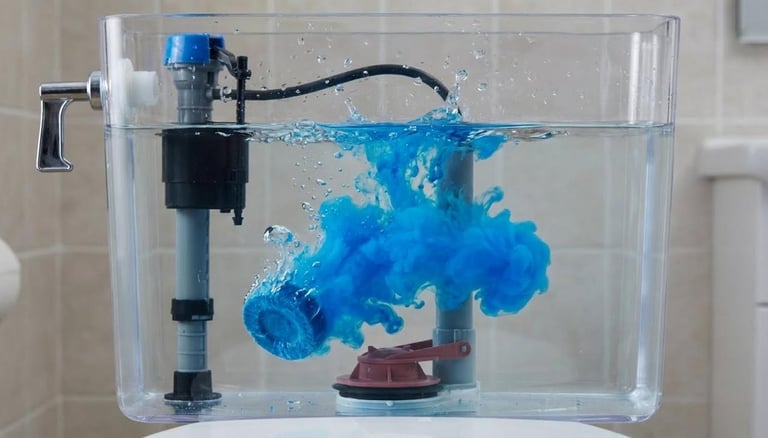
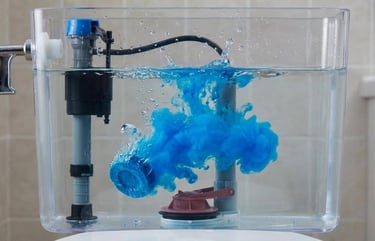
Harpic Flushmatic AI Animatics by SBN Media. The transparent cistern: No prop, no shoot, just expert prompting
And here's the part that matters most for a marketing budget. Money saved in production doesn't disappear. It can move to media buying, audience targeting, and distribution. A brand spending less to produce the same quality of output has more budget available to ensure that output actually reaches the people it's meant for. That's not a minor consideration. In most campaigns, distribution is where results are actually made.
3. Professional Character Acting and Emotional Storytelling Are Achievable in AI Video
For a while, the common criticism of AI-generated videos was fair. The characters felt flat. The performances felt empty. There was no real emotion in the frame, and audiences could feel it even if they couldn't name it.
That criticism is now outdated, with an important qualification.
Professional character acting, expert dialogue delivery, and emotionally resonant narratives can absolutely be achieved in AI video production today. But the word "professional" is doing significant work in this sentence. These outcomes are achievable by teams that bring filmmaking knowledge to the process, not just tool access.
What that looks like in practice: understanding how to prompt for a specific emotional register in a performance, knowing which AI video model handles close-up dialogue differently from wide environmental shots, having quality control processes that catch a flat delivery before it makes it to the edit, and knowing when to regenerate a shot rather than settle. These are craft decisions. They come from experience with filmmaking, not just familiarity with software.
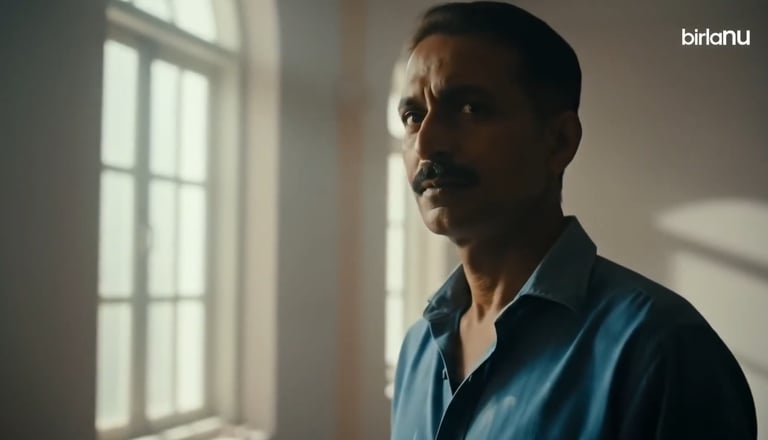
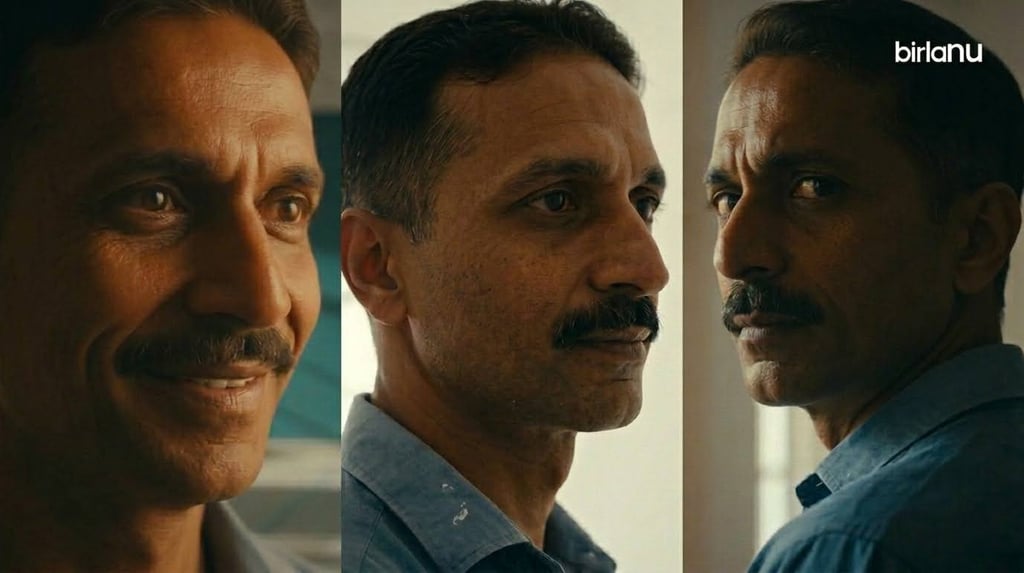
BirlaNu CoverMax Putty AI TVC by SBN Media. Emotionally poignant narrative. Realistic emotions. Expert character acting
AI video tools have dramatically expanded what's possible. But the directing intelligence, the judgment about what a scene needs to feel real, still has to come from the team producing the video.
4. AI Voice and Dubbing: A Genuine Advantage for Indian Brands
Voiceover production used to be one of the quieter budget items that added up fast. Booking studios, managing talent, recording in multiple languages, syncing audio to picture. For brands reaching multilingual audiences across India, the cost and time involved in traditional voiceover and dubbing was a real constraint.
AI voice and dubbing has changed this in meaningful ways. Using tools like ElevenLabs, production teams can generate high-quality voiceovers in multiple languages from a single approved script, without returning to a studio. AI dubbing preserves the tone and intent of the original dialogue while adapting it for a different language audience. For brands producing content in Hindi, Tamil, Telugu, Marathi, Bengali, and other regional languages simultaneously, the time and cost reduction is significant.
The important caveat: AI voice output needs supervision. Tone, pacing, emphasis, and pronunciation of brand names or product terms all require human review before anything is published.
5. Professional Post-Production Matters
This is the concept that gets the least attention in conversations about AI video, and it's arguably the most important one for the final quality of what a brand puts out.
Even though the visuals in an AI video are generated by AI models rather than captured on a camera, the post production process is essentially the same as it is for any professionally produced video. The edit is built shot by shot. Music is selected and placed. Graphics, titles, and other elements are added. Colour and sound are finished. The narrative arc of the video is shaped in the edit.
There is one meaningful difference in an AI video post production workflow. If a generated shot doesn't sit right in the edit, wrong pacing, wrong energy, wrong visual match, it can be regenerated and replaced far more efficiently than a live-action shot would be. That flexibility is genuinely useful. But it doesn't replace the need for a skilled editing team to make those judgment calls in the first place.
The production partner you choose for AI video production needs professional post production capabilities. Not just AI video production capabilities.
SBN Media works across both AI video production and live-action productions. Our AI ads and brand films portfolio includes campaigns for brands like Harpic, Meesho, BirlaNu, and Zydus. Our broader production portfolio includes corporate videos and brand films for Waaree Energies, Aditya Birla Hindalco, Asian Paints, Avaada, and Zomato, among other leading companies in India. The same post production standards apply across all of it, because the audience watching doesn't know or care how the footage was generated. They just know whether the video worked on them or it didn't.
The Bottom Line
AI video production is a genuine leap forward for what brands can create, how fast, and at what cost. But the technology is a capability, not a guarantee. The results depend entirely on the expertise, craft, and production discipline of the team using it.
If you're planning a video campaign and want to understand what professional AI video production can do for your brief, let’s get in touch.
© Sixteen By NIne Media 2024. All rights reserved.
SBN Media | AI Video Studio & Corporate Film Production – Mumbai, India
Specialized in AI-powered corporate videos, brand films, product ads, and multilingual content