
How Videos Turn Solar EPC Projects Into Marketing and Sales Assets
Solar EPC Video Marketing - The Fastest Way to Prove Capability
SBN MEDIA TEAM
6/17/20266 min read
The Indian solar EPC (Engineering, Procurement, and Construction) industry is growing steadily, driven by rising conventional electricity costs and India’s target of 500 GW of renewable energy by 2030. As competition intensifies, companies that position themselves as trusted partners for renewable energy projects are more likely to win. For this reason, video marketing for solar EPC companies has become the most impactful way to prove competence and execution capability.
At Sixteen By Nine (SBN) Media, we’ve worked with solar EPC clients to create videos that show their EPC capabilities across terrains. As a specialist video partner for solar EPC and industrial projects, we’ve seen firsthand how documenting project execution helps firms secure bigger deals. Let’s explain how the right video strategy can strengthen your solar EPC marketing.
Explore the Videos Made by SBN Media for Leading Companies in India
How Video Documentation of Solar EPC Projects Helps Win More Deals?
Solar EPC companies target commercial, industrial, and utility-scale segments. The prospective customers of an EPC company need evidence that the company is capable of executing multi‑MWp projects spread across hundreds or thousands of acres.
1. Video Is a Compelling Marketing Asset for Solar EPC Companies
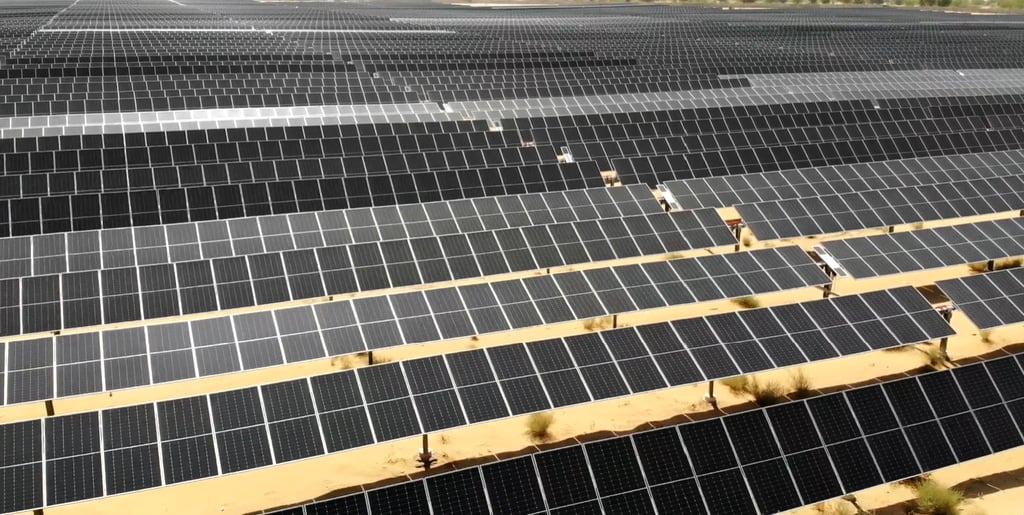
Video documentation shows genuine proof of your workmanship quality and QA protocols. When our client Waaree was executing a complex renewable energy project for ACCONIA Energia in Bikaner, Rajasthan, SBN Media captured the scale, engineering difficulty, and desert-specific challenges behind Waaree’s work.
The video documentation positioned Waaree as a reliable renewable energy partner capable of executing utility-scale projects in difficult environments. Wide shots communicated the scale of the plant, time-lapse sequences showed the intelligence of the tracking system, and close-up operational footage showed how the plant was built to perform optimally in harsh desert conditions. This documentation became a strong video marketing asset for Waaree.
2. Video Shortens Trust Building
Video marketing for solar EPC is a documentation of your technical expertise, project scale, and real-world satisfaction of the client. It reduces uncertainty about execution in remote locations with harsh conditions. In a 2–3 minute video, your target customers can see land preparation, mounting structures, modules, inverters, substation, safety practices, and surrounding context in one continuous narrative.
There’s no need to put together dozens of static reports and photos. That compresses what would normally require half a day of travel and a full site visit into a high-signal experience. It perfectly shows your execution quality and progress far earlier in the decision process.
3. Tenders, RFPs, and Boardrooms Are Now Video-First
Today, tenders and RFPs have project films and drone overviews embedded into them. Instead of relying on written proposals, contractors embed high-quality video files and multimedia into PDF proposals using hyperlinks. This provides measurable evidence of progress. This is because the competition is price-tight for projects backed by CPSUs, SECI, and state DISCOMs. Here, trust becomes the differentiator. So, video documentation of current solar EPC projects proves scale, progress, safety, and delivery capability and adds credibility to your execution capabilities.
4. Video Proof De-Risks Large Orders for Corporates and Utilities
For top-tier solar EPC companies with multi-GW order books, winning the next Letter of Award (LoA) isn’t about pricing alone. It comes down to marginal proof points. For example, when a massive company like ArcelorMittal or Tata wants to build a 500 MW solar farm, they invite bids from top-tier EPC companies like Waaree, Sterling & Wilson, or Larsen & Toubro.
At this elite level, everyone has good engineers and their pricing is highly competitive. The winner is decided by marginal proof points. A cinematic solar EPC project video of a multiple-MW project in challenging terrain provides an undeniable proof. It shows the board of directors exactly how well you execute at scale, which helps push your bid over the finish line.
3 Main Video Marketing Assets That Win Utility-Scale EPC Deals
There’s a wide variety of marketing video ideas for solar energy companies, but utility-scale EPCs need highly specific and evidence-based assets to win multi-crore tenders. Here are the three core video formats we recommend to our solar EPC clients:
1. Bid-Winning Capability Showreel
The goal of a capability showreel is to pass the initial technical and financial screening for large CPSU or private corporate tenders. It’s a fast-paced montage of your multi-GW portfolio, engineering capabilities across difficult terrains, safety records, heavy machinery in action, and scale of operations. Such a showreel is usually 60 to 90 seconds long and acts as a visual executive summary for your bid deck. When a procurement committee reviews 15 different EPC companies, a cinematic showreel instantly establishes you as a top-tier player capable of handling massive scale.
2. Waypoint Time-Lapse & Drone Progress Videos
To prove your timeline discipline and site management capabilities, use waypoint time lapse and drone progress videos. This format works because EPC clients like large private companies or DISCOMs favor on-time project completion. So showing them time-lapse proof of how efficiently you manage a site built across hundreds of acres generates immense trust that you will deliver on time.
3. Post-Commissioning Case Study Videos
Post-commissioning case study is the ultimate marginal proof point that pushes the LoA in your favor. A case study video shows a 2-to-3-minute documentary on a completed flagship project. It highlights the challenges, such as tough terrain and grid evacuation hurdles. This type of video marketing for solar EPC companies shows how your engineering team solved the challenges and features a testimonial from the satisfied client.
A post-commissioning case study video is a tremendous marketing asset because stakeholders and investors want to see the final outcome and hear that the project is generating the promised PLF (Plant Load Factor).
What Makes a High-Converting EPC Project Video?
A high-converting solar EPC project video is a proof-of-execution asset that features an impactful story structure and visual proof of technical capabilities. It combines visuals with clean data overlays and leaves the buyer with a firm impression of your company being a credible execution partner for large-scale renewable energy projects in India.
Here’s a detailed explanation of these elements:
1. Impactful Story Structure
The strongest solar EPC videos follow this structure:
What was difficult
How the EPC team solved it
What the project delivered
Start with the real project challenge, like uneven land, remote desert terrain, evacuation constraints, tight commissioning timelines, monsoon disruption, or ROW issues.
Then move into the EPC solution. Show how the team handled design, procurement, civil work, module mounting, inverter stations, transformer yards, cable routing, substation readiness, testing, and grid synchronization.
End with impact. Show the MW commissioned, timeline, units generated, CO₂ savings, industrial power requirement served, and long-term operational value.
2. Use Shots That Capture Visual Proof
Your potential clients want to see how you can handle massive installations, not just cinematic drone shots. So, the video should have shots of the drone passing over the site, close-ups of modules, inverters, transformers, HT panels, cable trenches, mounting structures, weather stations, and earthing systems. Substation and transmission line footage is important because power evacuation is often one of the major parts of a solar project.
Safety footage is also a part of a good solar EPC project video. Shots of PPE checks, toolbox talks, lifting operations, work-at-height practices, and site supervision show that you can handle scale and manage safety.
For a deeper breakdown of how these visuals are planned and captured on-site by our team at SBN Media, read our guide on how to film a solar EPC project. It explains the step-by-step production process, including drone coverage, ground camera planning, technical shots, interviews, and post-production for solar EPC project videos.
3. Data and On-Screen Graphics
A high-converting EPC video has strong visuals with clear data overlays to make the buyer understand the scale, location, timeline, and performance of the project.
Use on-screen graphics for:
Project capacity in MW/MWp
Location and terrain type
Client sector, such as steel, cement, manufacturing, data centres, or commercial infrastructure
Commissioning date
Number of modules installed
Inverter and transformer capacity
Substation voltage level
Transmission line length, where relevant
CO₂ savings
Annual generation estimate
Timeline achieved versus planned timeline
Safety milestones, such as zero LTI hours
Specific proof points such as ‘120 MWp commissioned in 7 months,’ ‘220 kV evacuation system integrated,’ ‘zero lost-time incidents,’ or ‘1.8 lakh tonnes of CO₂ avoided annually’ add more credibility to the video.
Turn Solar EPC Project Proof into Winning Deals
A strong project video helps EPC leaders show execution strength and stand out in competitive bids. Moreover, you can use the video as top, middle, and bottom of the funnel marketing asset to target diverse audiences like Corporate Sustainability Heads, Group Captive buyers, and C&I customers.
If you have an upcoming or already commissioned EPC project, get in touch with SBN Media to create an effective video marketing strategy around it. Well-produced project videos can stay active across bids for 3–5 years, when they are built around real milestones and clear proof points.


© Sixteen By NIne Media 2024. All rights reserved.
SBN Media | AI Video Studio & Corporate Film Production – Mumbai, India
Specialized in AI-powered corporate videos, brand films, product ads, and multilingual content