Optimising Empathy: AI as the New Standard in Health Communication
A Production Analysis of 'The Easiest Exam' and the Intelligent Future of Medical Marketing
SBN Media Team
12/26/20258 min read
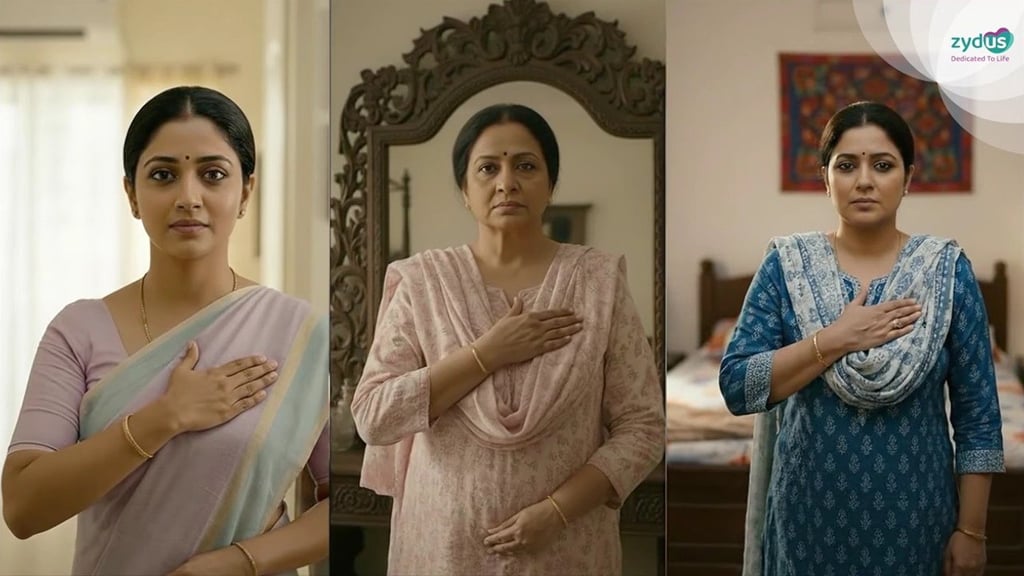
At SBN Media, we analyse what makes a video truly resonate. While pacing and clarity are always key, ‘The Easiest Exam- Breast Cancer Awareness Video’ required a different lens: empathy. We looked beyond standard production formulas to ensure we delivered this life-saving message with the utmost sensitivity.
Health communication is one of the most challenging genres in video production. The natural human reaction to medical topics is often avoidance. People rarely want to think about illness, hospitals, or exams during their daily routine. The challenge for us as a production house was to break through that natural hesitation—not by shouting louder, but by speaking softer.
When we partnered with Zydus to develop this video, our goal was clear: we needed to move the conversation away from fear and toward empowerment. We wanted to create a piece of content that didn't just warn women, but actively supported them.
This blog post is a look behind the scenes at how we constructed "The Easiest Exam." We will explore the specific production choices that helped this campaign resonate with audiences across India.
SBN Media’s Protocol for AI-Enabled Healthcare Content
Using Artificial Intelligence to visualise sensitive health topics opens up new creative possibilities. However, it requires a thoughtful approach to ensure the technology serves the human story. At SBN Media, we have established specific protocols to ensure our AI-driven productions remain deeply empathetic.
1. Prompting for Warmth and Safety: In an AI workflow, the "direction" happens in the prompt. For a subject as sensitive as breast cancer prevention, we prioritise emotional intelligence in our inputs. We meticulously guide the AI to generate environments that feel safe, warm, and inviting. By specifying soft lighting, calm domestic settings, and gentle body language, we ensure the visual output immediately puts the viewer at ease.
2. Designing for Trust and Relatability: Healthcare messaging relies heavily on trust. When generating the characters for this campaign, we focused on "Authenticity." We didn't want the characters to look like unattainable models; we wanted them to look like familiar, everyday women. We used AI to curate characters that the audience could see themselves in—mothers and wives who radiate a sense of calm and confidence.
3. The Human Touch in Post-Production: While AI generates the visuals, the emotional heartbeat of the story is crafted in the edit. We apply a "Human-Led" pacing strategy. Instead of rushing through the AI-generated clips, we allow the shots to linger. We create moments of pause and reflection, giving the viewer time to process the message. This ensures that the final video feels organic, thoughtful, and deeply human.
Character Design: A Family Conversation
A unique aspect of this campaign is the inclusion of men as active participants in the conversation. In many health campaigns, breast cancer is treated as a private topic discussed only between women. However, the script provided by Zydus allowed us to explore a supportive family dynamic.
The Role of the Initiator: In the video, the men are the ones who provide the gentle nudge. This reframes the narrative significantly. It suggests that breast health isn't just a burden for women to carry alone; it is a shared responsibility. The men are not portrayed as authoritative or controlling; they are portrayed as partners who care.
The "Digital" Performance: Since we were working with AI-generated characters rather than live actors, "casting" became a process of precise prompt engineering. We didn't look for the right actor; we designed the right persona.
Prompting for Softness: The biggest challenge with AI is that male characters often default to "stoic" or "neutral" expressions. We had to iterate extensively on our prompts to generate micro-expressions of warmth and concern. We focused on keywords like "gentle gaze," "soft smile," and "empathetic posture."
The "Visual" Tone: The line "Don't forget today" needed to feel like a loving check-in, rather than a rigid instruction. Since AI video generation is primarily visual, we focused on body language. We guided the AI to create scenes where the men were physically close but relaxed—leaning in, or simply making eye contact.
The Result: We achieved a performance that feels deeply human. Through careful iteration, we ensured the AI characters conveyed a sense of "Shared Care"—turning a medical reminder into a moment of empathy.
Where Art Meets Algorithm: Inside Sixteen By Nine (SBN) Media's AI Studio
The Narrative Approach: Creating Curiosity, Not Anxiety
One of the first decisions we made was to structure the video as a story first and a Public Service Announcement (PSA) second.
In traditional health marketing, the tendency is to lead with the issue. You might see a statistic on screen or hear a voiceover warning about risks. While this is factual, it often causes viewers to scroll past because the topic feels heavy.
The "Slice of Life" Opening
For 'The Easiest Exam,' we utilised a technique of grounded storytelling to prioritise relatability.
We open on scenes that are universally relatable:
A young woman is rushing to get ready for work.
A mother dropping her child off at the school bus.
An elderly woman is enjoying a quiet moment with her tea.
There is no medical equipment in sight. There is no urgent music. By presenting these familiar, safe scenarios, we invite the viewer into the world of the characters. We build a connection before we introduce the message.
The Gentle Reminder
The "hook" of the video comes from a simple dialogue exchange. In each scene, a loved one—a husband, a partner—offers a reminder:
"Don't forget today."
"You remember, right?"
This creates a moment of curiosity. The viewer wonders, What did she forget? Is it a bill? A birthday? This curiosity bridges the gap between the opening scene and the core message. By the time we reveal that the reminder is about the Breast Self-Exam (BSE), the viewer is already emotionally invested in the characters.
Production Note:
At SBN Media, we find that this "Curiosity Gap" is effective for many types of corporate communication. Whether explaining a new HR policy or a health initiative, starting with a relatable human moment often yields higher retention than starting with the technical details.
Visual Strategy: Designing a Safe Space
Visual language affects how a viewer feels about a subject before they even hear a word. If a video looks clinical, it feels like a medical procedure. If it looks warm, it feels like a part of daily life.
To normalise the conversation around breast self-exams, we made specific choices in Art Direction and Lighting.
1. The Lighting Palette: Warmth Over White
For this campaign, we chose to light the sets with "Warm White" tones and soft, diffused sunlight.
The Effect: The golden morning light streaming through the windows signals comfort, safety, and domesticity. It subconsciously tells the viewer, "This is a routine activity. You are safe here."
2. The Setting: Private and Personal
We ‘filmed’ the women in the comfort of their own homes—spaces where they feel safest. Through this, we stripped away the anxiety often associated with medical topics.
This was a deliberate move to take the "exam" out of the doctor's office and bring it into the home. It reinforces the idea that breast health is a part of your personal self-care routine.
3. The Mirror Sequence
The visual climax of the film features the three women standing in front of their respective mirrors.
This sequence serves multiple purposes:
Instructional: It subtly indicates where and how the self-exam can be done (in privacy).
Symbolic: The mirror represents self-reflection and truth.
Communal: By editing the shots of the three women together, we create a sense of solidarity. It shows that women of all ages—from their 20s to their 60s—are participating in this act of self-care together.
The "Hesitation": Adding Realism to the Performance
One of the small but significant details we focused on during production was the reaction of the women.
When reminded of the exam, the characters don't immediately smile and give a "thumbs up." Instead, they pause. They take a small breath. There is a moment of quiet processing before they head to the mirror.
Why We Filmed It This Way: We included this hesitation because it is real. Many women feel a moment of apprehension before performing a self-exam. They might be busy, or they might be slightly anxious.
By showing the characters taking a moment to gather their thoughts, we validate the viewer's own feelings. We are essentially saying, "It's okay if you hesitate. It's okay if you take a deep breath. What matters is that you do it."
This authenticity prevents the video from feeling like a polished, unrealistic commercial and grounds it in human behaviour.
Simplifying the Message: "Do Haath, Teen Minute"
In instructional videos, complexity is the biggest barrier to action. If a process seems complicated or requires special knowledge, people are likely to procrastinate.
The core message of this campaign—"Do Haath, Teen Minute" (Two Hands, Three Minutes)—is a masterclass in simplification.
By breaking the task down into these two simple metrics, the campaign removes the logical excuses. It transforms a "medical procedure" into a "quick check."
Rebranding the "Exam"
The title itself, "The Easiest Exam," works to change the perception of the task. The word "Exam" can trigger anxiety about passing or failing. By pairing it with "Easiest" and clarifying that no studying is required, the campaign turns a negative association into a positive, manageable challenge.
Production Comparison: Live-Action vs. AI
To understand how we achieved such high production value in a fraction of the time, it is helpful to compare a Traditional Live-Action Shoot with the AI-driven workflow used for Zydus.
The AI Filmmaking Blueprint: An Expert's Guide from SBN Media
The Value of High Production Standards
A question we sometimes encounter is whether high production value is necessary for social media content. "The Easiest Exam" demonstrates why quality matters.
While the script is strong, the execution—the lighting, the crisp audio, the colour grading—elevates the message.
Authority and Trust
High-quality production signals to the viewer that the message is important and credible. When a video looks professional, it builds trust in the organisation delivering the message. In healthcare, trust is the most valuable currency.
Frequently Asked Questions (FAQ)
Q: How do you balance medical accuracy with storytelling?
A: We believe the video's primary role is motivation, while the website or landing page handles the detailed education. For "The Easiest Exam," the video motivates the viewer to act by normalising the behaviour. The specific technical instructions are then provided on the campaign website (www.EasiestExam.com). This allows the video to remain engaging and emotional without becoming a dry instructional manual.
Q: How does the production timeline differ with AI?
A: Traditional high-end production typically spans 6 to 8 weeks due to casting, location scouting, and filming logistics. With our AI-driven workflow, we compress this into approximately 2 weeks without sacrificing quality.
The SBN AI Workflow:
Days 1-4 (Concept & Prompting): We replace casting and scouting with precise prompt engineering, designing the visual style and emotional tone from day one.
Days 5-9 (Generation & Iteration): Instead of a physical shoot, we generate scenes in real-time. This allows us to instantly tweak lighting, expressions, and angles until they are perfect.
Days 10-14 (Post-Production): We focus on the "Human Touch"—editing, pacing, and sound design to bind the visuals into a cohesive, emotional story.
Q: Can AI really capture genuine human emotion for sensitive topics?
A: For "The Easiest Exam," the warmth in the eyes or the softness of the lighting didn't happen by accident—it was the result of "Empathy Prompting" by our creative team. We treat AI as a camera that needs direction. When guided by human creativity, AI can produce performances that are indistinguishable from reality and deeply moving.
Q: Does using AI mean we lose creative control?
A: On the contrary, it gives us more control. In a traditional shoot, if you don't capture the right expression on set, you're stuck with it. With AI, we can refine a look, a lighting setup, or a background indefinitely until it perfectly matches the director's vision. It transforms the process from "capturing luck" to "designing perfection."
Conclusion: Empowering Action Through Story
The Zydus Lifesciences campaign "The Easiest Exam" stands as a testament to the power of empathetic storytelling.
It takes a subject that is often surrounded by silence and fear and brings it into the light of the living room. It transforms a medical necessity into an act of love and family care.
For us at SBN Media, this project reinforces our core belief: The way you tell a story is just as important as the story itself.
Whether the goal is to drive brand awareness, train employees, or save lives, the principles remain the same. Respect the audience, simplify the complex, and find the human connection.
We are proud to have partnered with Zydus on this initiative. We hope that the video not only serves as a benchmark for health communication but, more importantly, encourages women across the country to take those three minutes for themselves.
© Sixteen By NIne Media 2024. All rights reserved.
SBN Media | AI Video Studio & Corporate Film Production – Mumbai, India
Specialized in AI-powered corporate videos, brand films, product ads, and multilingual content